Category: News
-

Weekly Science Picks
Here we are at the end of one more impressive scientific week. The things appear as quite dramatic in this weekly review. Have you ever tried to imagine how that would work if you could experience a time freeze effect? Well, that’s not only the Matrix movie fiction, that’s our reality. Right now, the neuroscience…
-
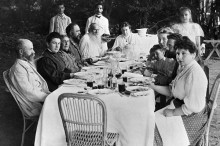
Leo Tolstoy’s Family Recipe for Macaroni and Cheese
In 1874, Stepan Andreevich Bers published The Cookbook and gave it as a gift to his sister, countess Sophia Andreevna Tolstaya, the wife of the great Russian novelist, Leo Tolstoy. The book contained a collection of Tolstoy family recipes, the dishes they served to their family and friends, those fortunate souls who belonged to the…
-
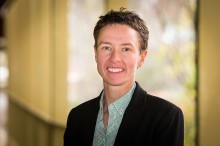
New Dean for ANU College of Engineering and Computer Science
Quantum optics specialist and ANU alumna Professor Elanor Huntington has been appointed Dean of the ANU College of Engineering and Computer Science (CECS). Professor Huntington is the current Head of the School of Engineering and Information Technology at UNSW Canberra, located at the Australian Defence Force Academy. She completed her PhD in experimental quantum optics…
-
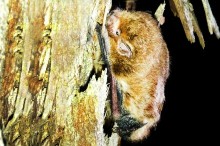
Bush Capital could lose its old trees
The bush capital is losing its large old native trees so fast it may have none left within 120 years, an ANU study has found. Researchers have surveyed trees in green spaces across Canberra and projected their future numbers. “We predict there will be a considerable decline in the number of large old trees in…
-
How to Draw Bugs Bunny?
Bugs Bunny, that carrot-chomping, cross-dressing rascal, might have been created by Tex Avery in the 1940 cartoon A Wild Hare, but he really came into his own under the direction of Chuck Jones. In cartoons like What’s Opera, Doc and Rabbit Season, Jones refined Bugs’ character, turning him into someone who was witty, resourceful and,…
-
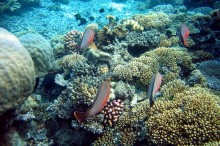
How the Great Barrier Reef survived colder temperatutes
The Great Barrier Reef grew during the last ice age, even though the water temperatures were four to five degrees colder than today, a team of international scientists has found. “It was right at the colder limit of what corals can take, but the reef grew and developed from there,” said Dr Helen McGregor, from…
-
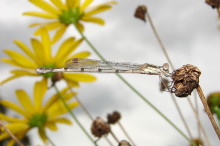
Weekly Science Picks
Here we are again! It’s our turn to provide you with the best highlights for the last week. A lot of things have happened during the last 7 days, but what have attracted our attention the most are the stories which come as follows. An interesting question we can notice here is related to the…
-
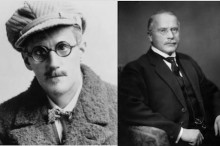
Carl Jung Writes a Review of Joyce’s Ulysses and Mails It To The Author (1932)
Feelings about James Joyce’s Ulysses tend to fall roughly into one of two camps: the religiously reverent or the exasperated/bored/overwhelmed. As popular examples of the former, we have the many thousand celebrants of Bloomsday—June 16th, the date on which the novel is set in 1904. These revelries approach the level of saints’ days, with re-enactments…
-

Public health specialists on standby for disasters
A flying squad of public health specialists has been officially launched in Melbourne, bringing together Australia’s best experts who can rush to emergencies and disasters around the country and the world to stop the spread of infectious disease. The group of specialist epidemiologists has already shown its value, with several experts sent to respond to…
-

A Testing Time for Future Teachers
By new regulations, all teaching students in NSW will have to pass a ”tough” literacy and numeracy test before they can graduate, because there are concerns some new teachers struggle to explain maths and grammar concepts to their students. The new online test will be introduced by 2016. Students who fail it will not be…
-

Kafka on Books and What Reading Does for the Human Soul
How to melt “the frozen sea within us.” “Reading is the work of the alert mind, is demanding, and under ideal conditions produces finally a sort of ecstasy,” E.B. White wrote while contemplating the future of reading in 1951. Indeed, the question of why books matter and what reading does for the human spirit has…
-
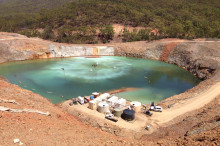
‘Green’ treatment removes harmful metals from mining wastewater
A new cost-effective technology to treat mining wastewater and reduce sludge by up to 90 per cent has been used for the first time at a commercial mine. The technology, called Virtual Curtain, was used to remove metal contaminants from wastewater at a Queensland mine and the equivalent of around 20 Olympic swimming pools of…
-
Weekly Science Picks
Have you ever thought how our world would appear if there would be an artificial intelligence to guide us? A quite futuristic statement, isn’t it? Well, not really! That sort of intelligence is becoming our reality. It this week’s editor selection we will talk more about that phenomenon and cover much more. Sure you will…
-

Unlocking the genetic code of the eucalypt
Scientists have sequenced the genetic code of the eucalypt for the first time, revealing how the Australian icon became the world’s favourite hardwood. The work also gives insights into the formation of the complex essential oils produced by eucalypts, which can help koala preservation efforts, minimise pest damage to plantations and could one day lead…