Category: Science
-

FDA Approved an Injection That Will Eliminate Your Double Chin
For many of us, trying to hide our double chin – perhaps under a scarf or turtleneck – is a daily battle. It’s a major cause of embarrassment for thousands of affected Australians, and is usually caused by obesity or other natural effects of aging. A double chin is actually just an extra layer of…
-

Common Myths and Truths About Food
It seems that a new study or experiment comes out on a weekly basis, claiming to expose a common food ingredient or simply to support a new fad diet. How do you if the claims are true, or if you’re being fed myths? It all comes down to due diligence. When you hear the latest…
-
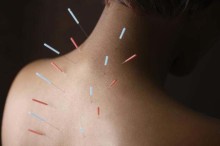
Alternative therapies – the facts
People have been using alternative therapies for thousands of years, long before scientific-based medicine became the norm. Defined as any form of medical treatment not covered by top medical school courses, alternative therapies come under many guises, from acupuncture and chiropractic to homeopathy and naturopathy. Many people will only use alternative therapies whereas others believe…
-
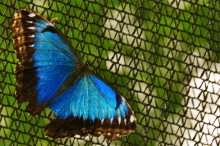
If a bird flies in the forest, does an insect hear it?
Morpho peleides is a tropical butterfly with a brilliant blue colour. Pilots flying over rainforests have been known to spot large collections of blue morphos above the treetops, warming themselves in the sunshine. The millions of tiny scales on its wings give it a shine and a glean that it uses to scare off predators.…
-
Circadian Neuroscientist from the University of Oxford Explains: Why do we sleep?
Russell Foster is a circadian neuroscientist: he studies sleep and its role in our lives, examining how our perception of light influences our sleep-wake rhythms. And he asks: What do we know about sleep? Not a lot, it turns out, for something we do with one-third of our lives. In this talk, Foster shares three popular…
-
The Most Useful Science Student Books for AU Universities
Student life can be a bit of a struggle – you are at your prime, young and energetic, and you need to balance studying, fun and work, all the while trying to make ends meet on an often limited budget. Be that as it may, Australia still has some of the best universities in the…
-
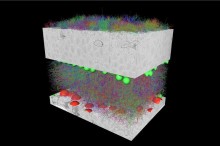
Connectomics: a window to the mind
The human brain has 100 billion neurons, connected to each other in networks that allow us to interpret the world around us, plan for the future, and control our actions and movements. Mapping those networks, creating a wiring diagram of the brain could help scientists learn how we each become our unique selves. Understanding the…
-
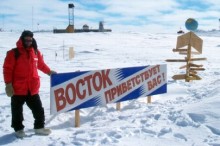
Lake Vostok: life beneath the ice
Imagine, Lake Vostok is covered by more than 3,700 metres of Antarctic ice. Devoid of sunlight, it lies far below sea level in a depression that formed 60 million years ago, when the continental plates shifted and cracked. Few nutrients are available. Yet scientist, led by Scott Rogers, a Bowling Green State University professor of biological…
-
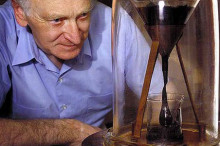
The World’s Slowest Experiment
What exactly is a liquid? It’s a seemingly basic question with an answer which may seem obvious to any of us. But as with so many things in science, it may not be as straightforward as you think. Of course you know what a liquid is, and the answer which may have come to mind…
-
Do animals have minds?
Animal Wise: the thoughts and emotions of our fellow creatures, by Virginia Morell, Black Inc. Books, 2013. Laughing rats, name-calling wild parrots, archer-fish with a sense of humour, and educated ants; the naturalist Charles Darwin would have loved this book. The philosopher Rene Descartes would equally have found it deeply troubling. Both with good reason.…
-
Lake Vostok and the search for extraterrestrial life
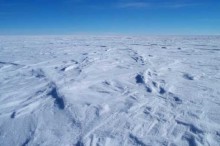
When Russian geographer and Antarctic explorer Andrey Kapitsa travelled to Vostok Station in 1959 he was looking for evidence of a subglacial lake that was first proposed by Russian scientist Peter Kropotkin at the end of the 19th century. Whilst Kropotkin was not able to specify the location of subglacial lakes, he theorised that masses…
-
Connecting the Quantum Dots
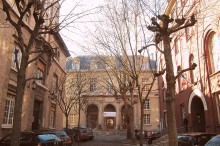
Last week, after I spent a couple of days in Brest, Brittany at a ESF, EU workshop/seminar brainstorming with other internet and scientific researchers on interesting topics related to internet science and innovation, I got myself back to Paris. I visited a French national institute with an international reputation for scientific excellence – ESPCI (École supérieure de…
-
Ediacara: a “failed” evolutionary experiment?
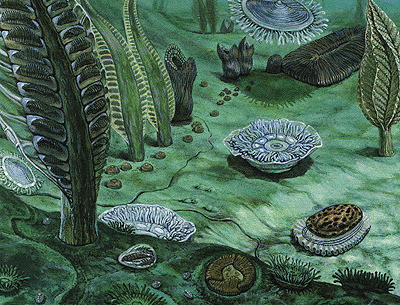
The Ediacara Hills, north of the city of Adelaide in South Australia are a tumbling mass of ancient rocks. Sunbaked now, 580 million years ago they were a sea alive with soft-bodied organisms. These organisms varied greatly: from millimetres to metres in size; from “blob-like” to intricate in complexity; and from sturdy and resistant to…
-
Ahead of his time: the genius of Nikola Tesla
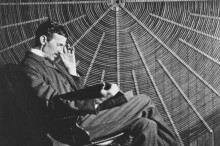
There is a dominant theme in the life of Nikola Tesla. His undoubted genius. Tesla pioneered, if not invented; AC motors, AC power generation and transmission, high voltage generation (Tesla coil), wireless transmission of power and information, radio controlled boats, cold discharge fluorescent lighting, and the ‘death-ray’. It also meant that he was ahead of…