Category: Physics
-

Does Spacetime Have Any Time Dimension?
The concept of time as a way to measure the duration of events is basically intuitive. Some researchers believe that this Newtonian idea of time as an absolute quantity and fourth dimension in spacetime is incorrect. They propose to replace these concepts of time with a completely new view: time as a measure of the…
-

Schrödinger’s cat: the quantum world not so absurd after all?
Since Erwin Schrödinger’s famous 1935 cat thought experiment, physicists around the world have tried to create large scale systems to test how the rules of quantum mechanics apply to everyday objects. Scientists have only managed to recreate quantum effects on much smaller scales, resulting in a nagging possibility that quantum mechanics, by itself, is not…
-

New light on dark matter: space station magnet attracts praise
Nobel prizewinner Samuel Ting, early Thursday morning (March 4, 2:00 AEDT), announced the first results from the Alpha Magnetic Spectrometer (AMS) search for dark matter. The findings, published in Physical Review Letters, provide the most compelling direct evidence to date for the existence of this mysterious matter. In short, the AMS results have shown an…
-
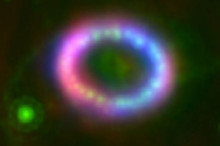
A Supernova Post-Mortem in Radio Waves
It was a late February night in 1987 when, standing on top of a Chilean mountain range, Ian Shelton saw something which no one had seen for centuries. Looking up in disbelief, he watched a star explode some 160 thousand light years away. Rushing to another observatory to check with someone else, he was initially…
-
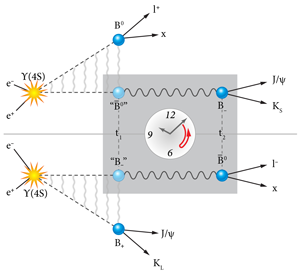
Turn Back Time
Recall the outrageously cool movie from the 1980s, Back to the Future? Marty McFly and Doc Brown were stretching scientific boundaries, righting the future, all while making sure not to meet their future selves. Fast-forward and time travel may be closer than we think. (Close, relatively speaking of course.) If you like exceptions to the…
-

Weekly Science Picks
Ah, the weekend! Time to kick back, relax, and look back over everything that’s happened over the past few days. And I’m rather happy to say that some quite interesting things have happened, including the Leonid meteor shower which peaked on Friday night (though if you step outside after dark and watch the sky, you…
-
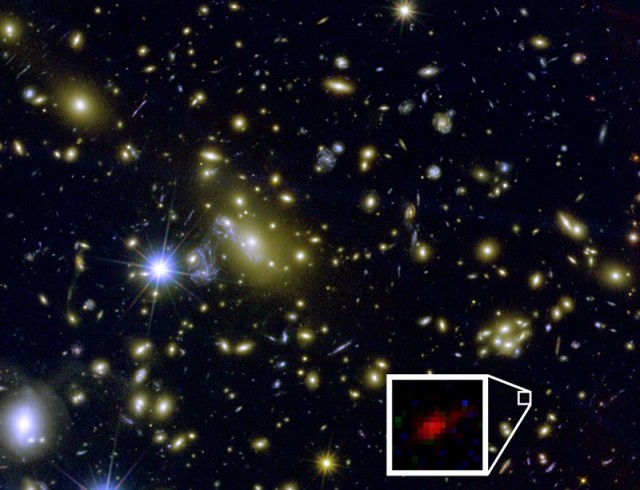
A long time ago in a galaxy far, far away
Feast your eyes on this image… The tiny object in that inset may not look like much. A blurry smudge of red pixels. Not nearly as dramatic as the stunning bouquet of galaxies all around it. But in astronomy, not everything is quite so straightforward. That small red smudge is probably the most exciting thing…
-

The (nuclear) alchemists of Darmstadt and the doubly magic tin-100 nucleus
An international group of researchers announced in the journal Nature that they had succeeded in creating tin-100. This experiment helps us understand how heavy elements have formed. A few minutes after the Big Bang the universe contained no other elements than the lightest; hydrogen and helium. We, the objects around us, the Earth and the…
-
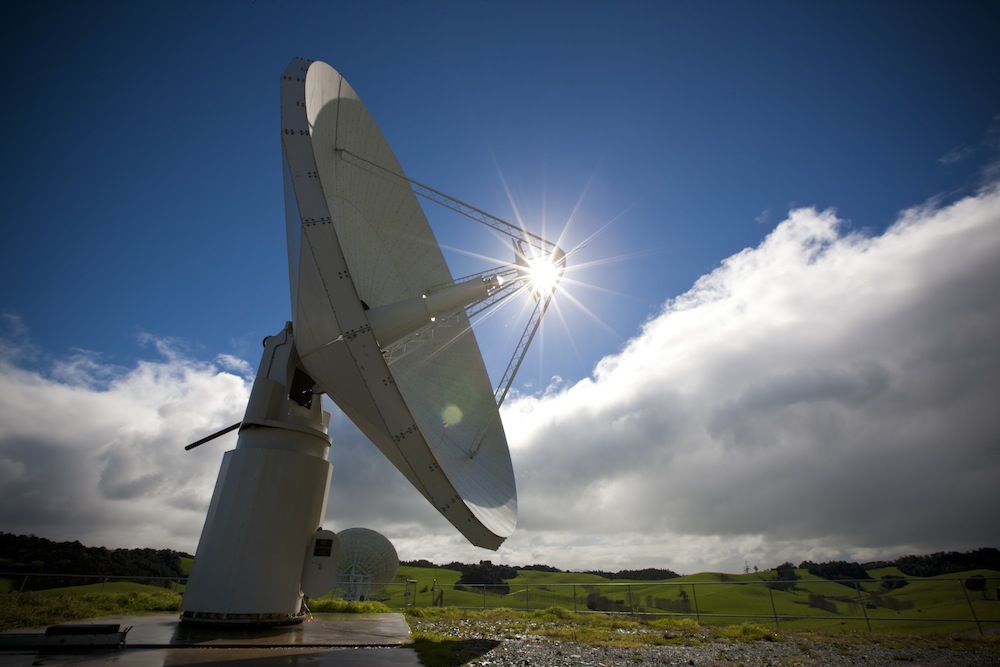
Radio quiet, please!
Originally conceived over 20 years ago, there’s a project being undertaken by scientists and engineers across the whole world to help us all better understand the mysteries of the galaxy and the very beginnings of the Universe. It’s estimated to be completed by around 2024,costing $1.85 billion AUS (€1.5 billion). Once completed, it’s set to…
-
A brand new boson?
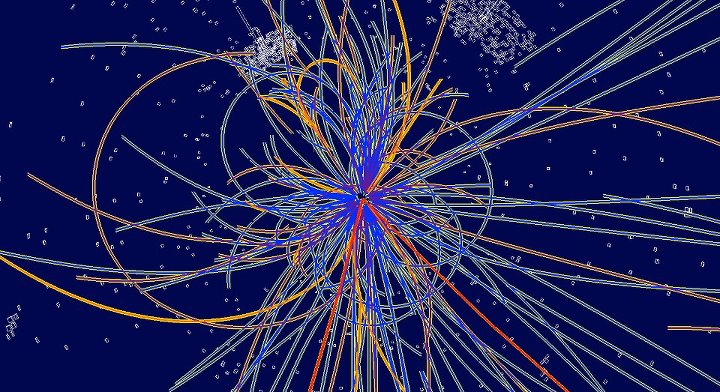
It’s official. As was the subject of a press conference here in Europe this morning, the LHC has discovered a new particle. Is it the much talked about Higgs boson? Evidently it’s far too early to say with certainty. But whatever it is, it’s a brand new subatomic particle, it’s consistent with a Higgs boson signature,…
-
The Higgs boson does exist: New particle observed at 125 GeV
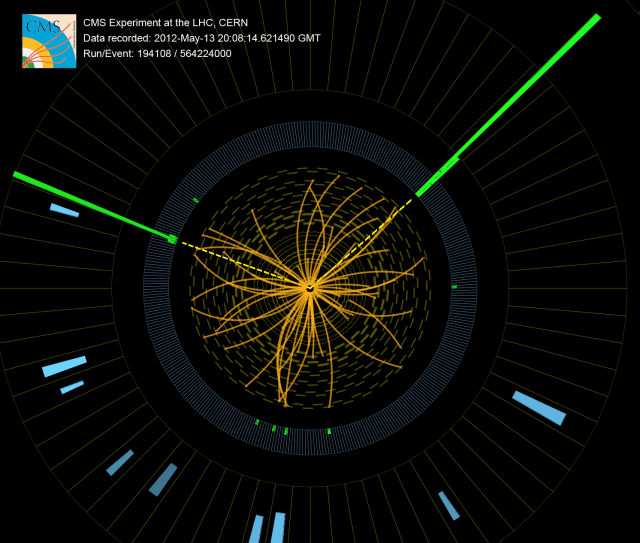
Australian researchers helped design and build parts of the ATLAS detector and helped analyse the results. Researchers using two huge detectors at the Large Hadron Collider announced the results of their searches at a joint scientific seminar in Geneva and Melbourne, where the International Conference on High Energy Physics is being held. In a joint…
-

Weighty thoughts on antimatter
A pulse of particles speeds into the vacuum chamber. Positrons, 20,000,000 antimatter particles, clumped in a pulse one nanosecond deep. Like a silent, angry swarm they are targeted into a porous silica target. The positrons are confined by a magnetic field, increasing their interaction with the silica. Some attract electrons and synthesize into positronium, a…