Category: Space
-
A Secret Code to the Cosmos is Hidden in the Light
Are you watching the new Cosmos: A Spacetime Odyssey – the scientific documentary television series? I am, and I’m thoroughly enjoying it! The series is a follow-up to the 1980 television series Cosmos: A Personal Voyage, which was presented by Carl Sagan. The all new Cosmos: A Spacetime Odyssey science documentary consists of thirteen episodes…
-
Mars Colony Development: Mars One Supplier Update
All of the greatest explorations undertaken by humanity have been hindered by unexpected variables, the Mars One mission is no exception. The first settlers on Mars are currently projected to begin colonization in 2025, making homo sapiens an inter-planetary species. With so much progress and many promising suppliers to propel the mission there are plenty of reasons…
-
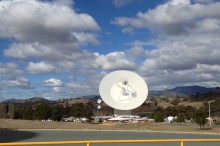
Space Open Day at the Canberra Deep Space Communication Complex
The Canberra Deep Space Communication Complex (CDSCC), located on the rural outskirts of Canberra at Tidbinbilla, is one of only three NASA deep space tracking stations spread around the globe. On Sunday 18th August, as part of National Science Week they held their biennial ‘Space Open Day‘, affording a rare opportunity for visitors to tour…
-

Women in Space: Judith Resnik
This article is one of a series of articles in which I will profile every woman astronaut, cosmonaut and taikonaut who has been into space. Last time we looked at the career of Sally Ride. Today I’m profiling astronaut Judith Resnik. (The feature image above is a collection of drawings of women astronauts by artist…
-
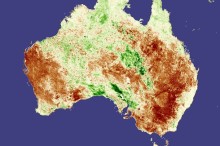
Should Australia have its own space agency?
Despite its lack of a space agency, Australia has a rich space heritage. Its telescopes, many of which are set up in desert areas, provide excellent views of the nighttime sky. It has dishes that stay in touch with NASA spacecraft (perhaps most famously, broadcasting Apollo 11 as the first lunar landing crew worked on…
-
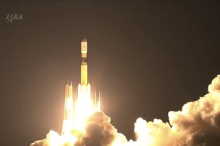
ArduSat: Kickstarting a new era in space education
I was awake at stupid o’clock last Sunday morning to watch NASA’s livestream of the launch of the HTV-4 resupply vehicle. At precisely 05:48:46AM AEST, JAXA H-IIB F4 launch vehicle lifted off smoothly en route to resupply the International Space Station (ISS). The 5.4 tonne payload comprised all the usual suspects: water, replacement and upgraded…
-
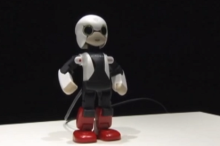
Astronauts And Some Australians Get Lonely. How To Fix? This Robot Could Be A Start.
Living alone can be an isolating experience, whether you’re in a remote area of the Outback, in a condo in downtown Sydney, or floating in the International Space Station. In the latter spot, to be sure, there are other astronauts on board and Mission Control is only a radio call away. Still, however, you’re away…
-
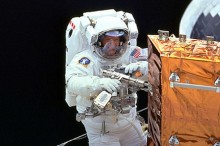
The astronaut as an Outback handyman or handywoman
Perhaps the ultimate expression of Australian self-sufficiency is those workers in the remote areas of the Outback, digging for oil or dinosaur treasure or perhaps using a telescope to gaze at the stars, far from light pollution. In much of Australia, if something breaks, you’re going to have to find a way to fix it…
-
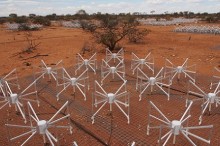
Spiders on Mars? No, An Australian Radio Telescope!
Those white insect-like things you see in the picture are not spiders on Mars, but the array that they’re a part of could help astronomers understand how the universe and its life came to be. What you see there is the Murchison Widefield Array, a newly ready radio telescope in western Australia in a remote area…
-
Australian scramjet test illustrates the importance of suborbital research
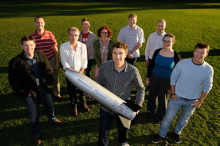
Space rocket launches tend to get a lot of attention in the media, particularly when humans are on board. There’s something a little … strange … about watching a human-made object make it into orbit, even as we’re well into our sixth decade of sending stuff into the solar system. While many people think that…
-
Could Australian Terrain Help Train Future Mars Explorers?
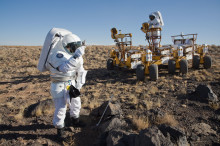
How do you rehearse for a Martian space trip? Simulations can only bring astronauts so far when they’re figuring out a mission. A typical person training for the International Space Station can expect a combination of classroom work, spacewalk rehearsals in the water, and robotic arm training using articles that are very close to the…
-
Pluto’s new moons named: Spock still homeless
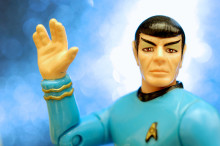
The dwarf planet, Pluto, can still generate plenty of public interest – if the naming of its two recently discovered moons is anything to go by. After their discovery, the leader of the research team, Mark Showalter, called for a public vote to suggest names for the two objects. The on-line contest, aptly named ‘Pluto…
-
Explosions visible from across the Universe
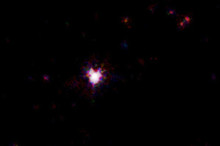
Gamma ray bursts are the most violent and energetic events in the entire universe. Powerful blasts of high energy gamma radiation, bright enough to be seen from literally the very edge of the visible Universe. And yet, we know surprisingly little about them. Of course, we have theories, but every now and again astronomers spot…
-
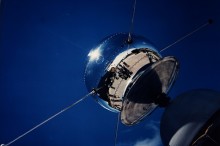
Is That Satellite Junk? Or An Important Piece of Australian History?
Please don’t go all Chicken Little on us, but do be aware: there’s thousands of pieces of metal orbiting above your head. Many of these satellites are dead (read: out of fuel and uncontrollable.) And if one happens to smash into another, the results could be catastrophic. Humans depend on satellites for everything from the…