Category: News
-

New grants to accelerate research uptake
Queensland’s researchers, scientists and their commercial partners are encouraged to apply for grants of up to half a million dollars under the state government’s new science and research funding program. The Accelerate Partnerships funding program was opened by Queensland Chief Scientist Dr Geoff Garrett AO who said universities and research organisations with their industrial or…
-
Weekly Science Picks
It’s Sunday again! It’s our time to give a brief review of the most amazing science and technology news that have appeared on the web during this week. The task was quite challenging, but we made it. We proudly present you the top stories of this Weekly Science Picks. Body bacteria: Can your gut bugs…
-

Quantum Entanglement Animated
PhD Comics has released the third video in an animated series explaining Quantum concepts and devices. This one focuses on Quantum Entanglement and features the work of Caltech physicists Jeff Kimble and Chen-Lung Hung. Meanwhile Jorge Cham, creator of PhD Comics, provides the accompanying animation. Source and image.
-

Harvard Free Online Courses
A quick note: Shaye J.D. Cohen, a professor of Hebrew Literature and Philosophy at Harvard, has recently released his second free course on iTunes. The first course was called The Hebrew Scriptures in Judaism & Christianity. The new one, simply titled The Hebrew Bible, ”surveys the major books and ideas of the Hebrew Bible (also…
-

Rocks around the clock: asteroids pound tiny star
Asteroids hit the Earth, the Moon and even, it seems, distant stars. Scientists using CSIRO’s Parkes telescope and another telescope in South Africa have found evidence that a tiny star called PSR J0738-4042 is being pounded by asteroids — large lumps of rock from space. “One of these rocks seems to have had a mass…
-

The Art of Restoring Classic Films
Why have cinephiles, from the era of Laserdiscs through that of DVDs and now Blu-rays, so consistently respected The Criterion Collection? Speaking as one such cinephile, we could point to a number of factors: their curatorial bent toward important films, their production of rich supplementary features, their always impressive pieces of cover art. But Criterion…
-

Weekly Science Picks
We have come to the end of one more week and it’s time to summarise what has happened during this week. As usual, the task was quite challenging, but we made it. Here is the review of the most exiting and fascinating news from the world of science and technology. Science and Religion, Genome Cryptography,…
-

“Natural” vs “Organic”: What is the Difference?
“Natural” vs “Organic”: What is the difference? Both sound healthy and good. In fact, most consumers feel the two words are synonymous. Are they the same? Is there any difference? According to ABC News, “The term ‘organic’ is tightly regulated and means food was produced under approved methods and is free of synthetic fertilizers.” But…
-

New analysis promises better weed management of the Lake Eyre Basin
A new cost-effective weed management analysis has been developed to help protect one of the most unique regions in the world – the 120 million ha Lake Eyre Basin. A team of experts developed the framework for cost-effective investment in weed management in the Lake Eyre Basin (LEB). The aim of the project was to…
-
Pilbara marine health check – good and bad news
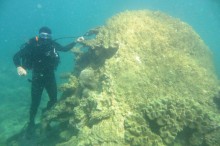
A health and wellbeing check up of World Heritage-listed reef ecosystems in the Pilbara region of Western Australia will provide a critical baseline of marine conditions to government, industry and researchers. The 300km swathe of coastline to be surveyed during the five year, $12 million Pilbara Marine Conservation Partnership includes two major marine parks and…
-
How Does Bacteriography Work?
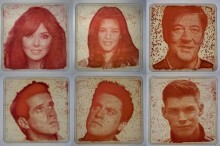
Stephen Fry is taking part in a curious science experiment. It involves creating a portrait of the writer/comedian/science enthusiast, using nothing but his own bacteria and cells. According to the web site of The Big Bang UK Young Scientists & Engineers Fair, the “bacteriographs” — as the portraits are called — are “made from the…
-
Weekly Science Picks
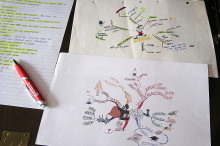
It’s the end of this week, so it’s our time to summarise the most incredible and fascinating news from the area of science and technology. After careful consideration, we decided to share the following highlights with you. Genetic Forensics Wakes a Dragon A genetic investigation into the illegal trade of sailfin dragons has unearthed a…
-

Researchers to debunk super spending myths
Researchers from CSIRO and Monash University in Melbourne are putting the spending habits of retirees under the microscope in an effort to understand the finer details behind how they use and manage their super in retirement. “We’re looking to understand what retirees need, how long their super lasts and what investment options and financial products…
-
Could Our Software be Unhackable?
A team from ULCA and MIT recently came to very interesting results. Namely, they offer hope that encryption could protect not just an output, but an entire program. Too good to be true, ha? This new method of program obfuscation could lead to ultra-secure software that keeps your personal information safe from potential attackers. The…