Category: News
-

Weekly Science Picks
Well, it’s Sunday again. It’s our time to recapitulate all the scientific contributions, ideas, events and discoveries that have occurred in this week. To be honest, the job was quite challenging, since the science and technology market is highly competitive and unpredictable. Luckily, we made it. Now we would like to present you top stories…
-

Did You Know This About Einstein?
The following story is so amazing, so that’s why we decided to share it with you. Imagine Albert Einstein. Image 1931. Imagine the Yale Puppeteers of that time. Here we are. Our journey can begin. The Yale Puppeteers, consisting of Forman Brown, Harry Burnett, and Roddy Brandon, came together in the 1920s and spent almost…
-

10 years on Mars leads to liveable mud
A team of researchers has found what may once have been the most liveable mud on Mars. Some of the oldest minerals ever analysed by NASA’s Mars Opportunity Rover show that around four billion years ago Mars had liquid water so fresh it could have supported life. The findings were announced in a special ‘Exploring…
-

A Private or Public Education: How Much Do They Cost?
Education in Australia can be distinguished according to sources of funding and administrative structures. There are two broad categories of schools in Australia: public schools and private schools. But, what are the differences at the moment? How much do they cost today? The Australian Scholarships Group organised a survey that showed parents of a child…
-

What Do Big Thinkers Think of the Big Question?
It’s a New year, which means it’s time for the Edge.org to pose its annual question to some of the world’s finest minds. The 2014 edition asks the question, “What Scientific Idea is Ready for Retirement?” The question came prefaced by this thought given as follows. Science advances by discovering new things and developing new…
-
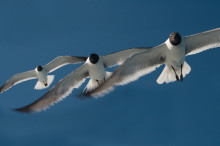
New Research Proves the Bird’s “V” Formation is Aerodynamic
The brilliance of nature’s genius has been proven once again. New research shows that the bird’s “V” formation is aerodynamic for real. In flight formation, each bird has an assigned position and each flap of the wing is precisely timed to conserve energy. What does this mean? The bird in front takes around 40 %…
-

Weekly Science Picks
It’s time to summarise scientific contributions for this week and to open a new chapter for new discoveries. As usual, we would like to present the headlines which marked out the current week. The task was not the simple one, but we made it. Here are the most incredible things from the world of science…
-
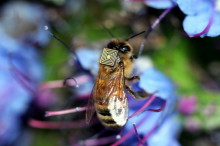
Bee sensors take flight to help farmers
Thousands of honey bees in Australia are being fitted with tiny sensors as part of a world-first research program to monitor the insects and their environment using a technique known as ‘swarm sensing’. The research is being led by CSIRO and aims to improve honey bee pollination and productivity on farms as well as help…
-

Their Time is Coming!
A cyborg future is coming. Man’s relationship with machine is merging. Machines are an extension of our own intelligence. Soon we all will wear some kinds of bio-sensors to tell us what is happening inside us. That’s the future. A cyborg or a cybernetic organism is a being with both biological and mechanical parts. Generally,…
-

Is gold (literally) everywhere around us?
It sounds like something out of an Austin Powers movie, but could gold be created within an instant? Recently, scientists have been reporting that non typical objects such as water have literally been turning into gold. Now, this isn’t a cause to quit your day job, there are huge amounts of global-sized factors in play.…
-

Weekly Science Picks
As you all know, we proudly can say we fixed all the problems we had in the past and returned to our audience after a short break. We are continuing our work as before and for this weekly wrap up we prepared quite interesting things from the area of science and technology. Will drones become…
-

Eddies may put Sydney-Hobart in a spin
Competitors in this year’s Rolex Sydney-Hobart race fleet may need to negotiate their way around three significant ocean eddies as they sail south this year, according to oceanographers. CSIRO’s Dr David Griffin has generated a view of the course based on observations from Australia’s Integrated Marine Observing System (IMOS). The first, south-east of Jervis Bay,…
-

Discover your own black hole
Discover black holes while you ride to work! Or hunt them down on your home computer. ‘Radio Galaxy Zoo’, launching today, is a new ‘citizen science’ project that lets anyone become a cosmic explorer. By matching galaxy images with radio images from CSIRO’s Australia Telescope, you can work out if a galaxy has a supermassive…
-

Is Our Universe Simply a Projection of Another Cosmos?
A new research theory claims that we could simply live in a projection of another cosmos. How is that possible? By holographic principle, gravity comes from thin, vibrating strings. These strings are holograms of events which exist in a flatter cosmos. According to this theory, everything we experience can be assumed as events occurring in…