Author: Editorial Board
-
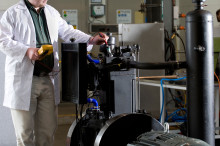
CSIRO innovation could reduce brown coal emissions by up to 50 per cent
CSIRO and its industry partners plan to trial the Direct Injection Carbon Engine (DICE) in Victoria’s Latrobe Valley, the second largest and lowest cost brown coal resource in the world, with the aim of reducing emissions from brown coal-generated electricity by 50 per cent compared to current technology. Brown Coal Innovation Australia (BCIA) has allocated…
-

ANU delivers the world’s first Hindi-English MOOC
The Australian National University is offering the world’s first bilingual Hindi-English Massive Open Online Course (MOOC). The 10-week course, Engaging India, is a partnership between ANU and the global MOOC provider edX, which was founded by American universities Harvard and MIT. MOOCs are free courses, open to anyone around the world and delivered online. Engaging India already has…
-

Developing nations ride a motorcycle boom
Asia’s rapidly developing economies should prepare for a full-throttle increase in motorcycle numbers as average incomes increase, a new study from The Australian National University has found. Using data from 153 countries, researchers Dr Paul Burke and Dr Shuhei Nishitateno found the number of motorcycles per capita increases until average incomes reach around $8,000 per…
-
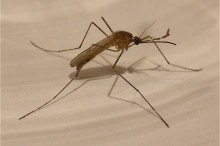
Scientists find new way to fight Malaria drug resistance
An anti-malarial treatment that lost its status as the leading weapon against the deadly disease could be given a new lease of life, with new research indicating it simply needs to be administered differently. The findings could revive the use of the cheap anti-malarial drug chloroquine in treating and preventing the mosquito-bourne disease, which claims…
-
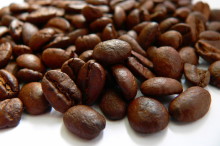
The Science of the World’s Most Popular Drug
Here’s a quick shot of science to start your day. The American Chemical Society, an organization representing chemists across the US, has released the latest in a series of Reactions videos. Attempting to explain the science of everyday things, previous Reactions videos have demystified the chemistry of Sriracha, Love, Pepper and more. This latest video…
-

Deregulation of student contributions
Vice-Chancellor Professor Ian Young and Chancellor Professor Gareth Evans have called for the deregulation of student contributions so Australian institutions can offer courses which better compete with those on offer from the world’s best universities. In an opinion piece published in The Australian, they said the proposal would provide the best outcome for students, and would allow universities to focus…
-
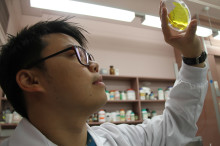
‘Botox of plastic’ to freeze power costs
A new material that prevents plastic from ageing has been developed by CSIRO – offering huge environmental and cost savings for the energy industry. When applied to plastic lining this ‘botox for plastic’ can clean up exhaust gases from power plants much more effectively than existing methods. Currently, the techniques industry use to separate out…
-

Two Artificial Intelligence Chatbots Talk to Each Other & Get Into a Deep Philosophical Conversation
The folks at the Cornell Creative Machines Lab are “interested in robots that create and are creative.” Here’s one such example of robots getting creative. Above, the lab lets two chatbots (essentially computer programs designed to simulate an intelligent conversation) start chatting with one another. They start by exchanging pleasantries. Then things get deeply philosophical,…
-
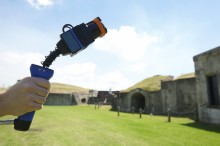
Research leads to food and sport deals
The commercialisation of CSIRO research and technology reached an important milestone last week with agreements being signed in the food, sport and surveying industries. CSIRO has now created more than 150 companies and currently hold interests in around 30. It is also Australia’s largest patent portfolio and issues around 80 licenses each year, many to…
-
2014 Prime Minister’s Prizes for Science
The Prime Minister’s Prizes for Science are Australia’s national annual awards for recognition of outstanding achievement in science and excellence in science education. Nominations are open to Australian citizens and Australian permanent residents. The five awards are: • The Prime Minister’s Prize for Science (AUD$300,000); • The Frank Fenner Prize for Life Scientist of the…
-
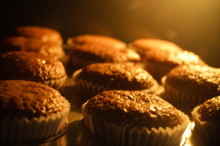
Science & Cooking
I can hardly think of a more appealing nexus of the sciences, for most of us and for obvious (and delicious) reasons, than food. Add a kind of engineering to the mix, and you get the study of cooking. Back in 2012, we featured the first few lectures from Harvard University’s course Science and Cooking:…
-
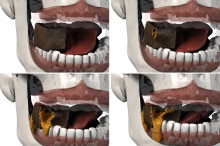
Chocolate bytes with virtual mouth this Easter
Here’s something to chew over. Easter chocolates, along with our favourite everyday foods, could taste just as good but be healthier in future, thanks to new technology that is revealing the science of chewing. CSIRO’s 3D mastication modelling, demonstrated for the first time in Melbourne today, is starting to provide researchers with new understanding of…
-
Years of Living Dangerously – the New Series on Climate Change
Ever since Al Gore’s An Inconvenient Truth came out to critical accolades, Conservative scorn and a handful of Oscars, there has been no shortage of well meaning documentaries about the perils of climate change. Most feature a Hollywood celebrity or two, a liberal amount of liberal guilt, and a distinct sense of preaching to the…
-

The Science behind Architecture
Architecture, in various forms, dates back to early man. But it wasn’t until the late Renaissance period that modern architecture that we know today came about; when engineers, artists and architects separated and formal architecture training began in the 19th century. It became less focused purely on its artistic merit, and more on its quality…