Author: Editorial Board
-

How to Dance Your Dissertation: See the Winning Video in the 2014 “Dance Your PhD” Contest
We’ve seen how modern dance can explain key concepts in statistics (e.g. correlation and sampling error). So why couldn’t dance also illustrate the conclusions of a plant biology doctoral dissertation? Uma Nagendra, a graduate student at the University of Georgia, has just won the 2014 edition of the “Dance Your Ph.D.” contest. Sponsored by Science…
-

ANU receives $35 million research funding boost
The ANU has won more than $35 million in prestigious Australian Research Council (ARC) grants for 90 projects, enabling world-class research across the university. “These grants allow the ANU to build on its strengths and further enhance the University’s reputation as a world-leader in research,” ANU Deputy Vice-Chancellor (Research) Margaret Harding said. “The ARC Discovery…
-

Bowel cancer cases halve after screening
The incidence of bowel cancer is dramatically lower after screening, a new report has found. Research involving 200,000 people found that people who had had bowel cancer screening had a 44 per cent lower risk of developing the disease in the four years following screening. “This is great news for the community – those who…
-

WHO updates personal protective equipment guidelines for Ebola response
As part of WHO’s commitment to safety and protection of healthcare workers and patients from transmission of Ebola virus disease, WHO has conducted a formal review of personal protective equipment (PPE) guidelines for healthcare workers and is updating its guidelines in context of the current outbreak. About the PPE guidelines These updated guidelines aim to…
-

Man Hauls a Piano Up a Mountain in Thailand and Plays Beethoven for Injured Elephants
If we’ve featured Jazz for Cows on Open Culture, then why not Classical Music for Elephants? Actually, they’re not just any elephants featured above. They’re old, injured, handicapped, sometimes blind elephants who live in the mountains of Thailand. And the gentleman playing a slow movement from Beethoven’s “Pathétique Sonata” is Paul Barton. On his Youtube…
-

New CSIRO software opens Windows to science
New software which offers scientists and researchers an easy way to analyse, model and visualise scientific datasets has been released by CSIRO. The free software, known as Workspace, is purpose-built for scientific applications and allows researchers to present their findings through stunning visualisations. Developed over the past eight years at CSIRO, Workspace has already been…
-

A Quick Introduction to Literary Theory: Watch Animated Videos from the Open University
Just what is an author? It might seem like a silly question, and an academic dissection of the term may seem like a needlessly pedantic exercise. But the very variability of the concept means it isn’t a stable, fixed idea at all, but a shifting set of associations we have with notions about creativity, the…
-

Immunology researcher wins $25,000 Young Florey Medal
Professor Carola Vinuesa from the John Curtin School of Medical Research has been awarded the inaugural CSL Young Florey Medal for her research into how the immune system produces antibodies to fight disease. “I’m very honoured and flattered,” said Professor Vinuesa. “I think it’s a reward not just for me, but for the many people…
-
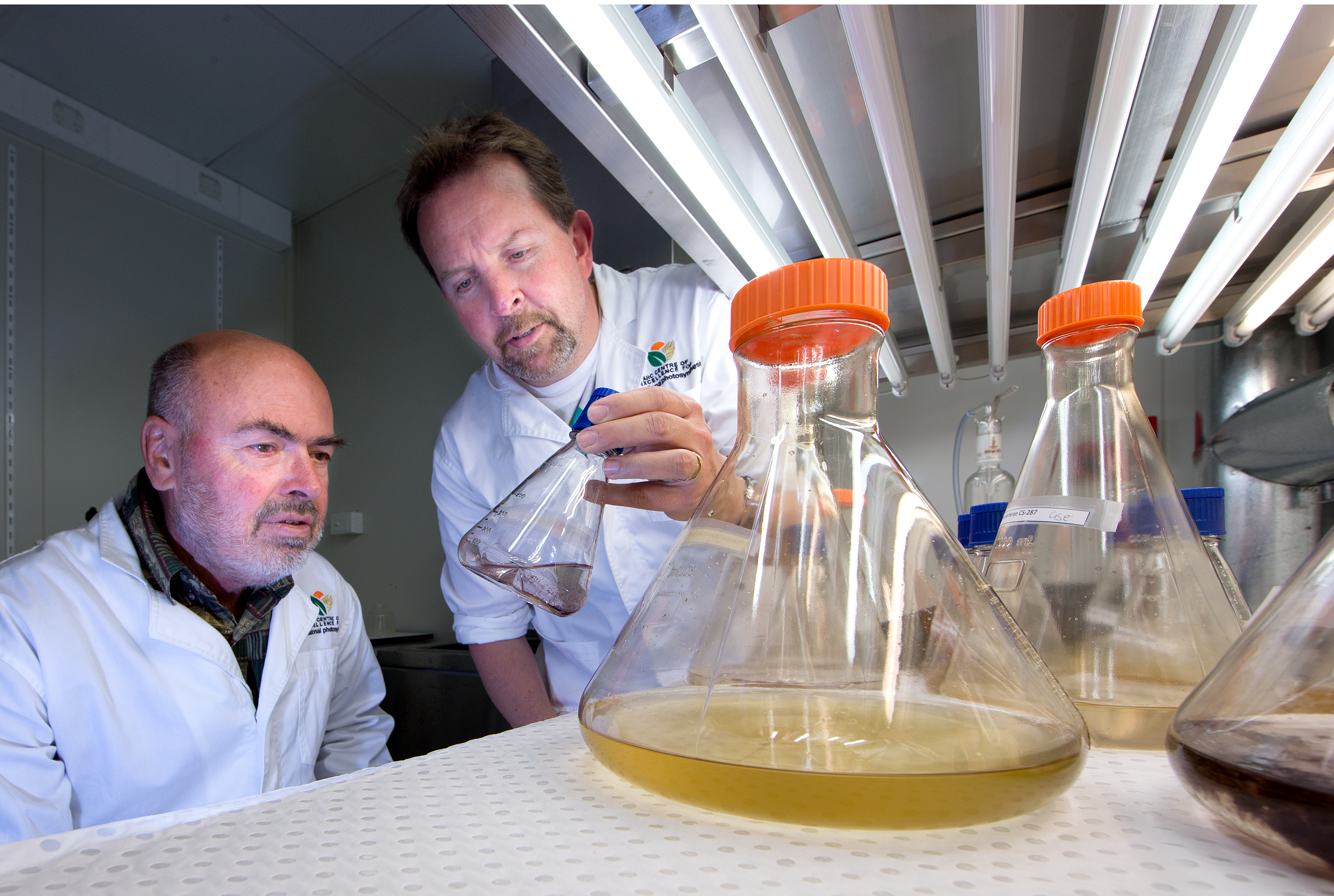
New research centre set to secure food for the future
A research centre exploring new technologies for improving crop yields to secure food supply has been launched at the Research School of Biology. The Australian Research Council (ARC) Centre of Excellence (CoE) for Translational Photosynthesis seeks to increase yields of major crops such as wheat and rice by improving the way that plants capture the…
-

New Animated Web Series Makes the Theory of Evolution Easy to Understand
When it comes to matters of broad scientific consensus, I’m generally inclined to offer provisional assent. Like everyone else, I have to rely on the expertise of others in matters outside my ken, and in many cases, this rational appeal to authority is the best one can do without acquiring the relevant qualifications and years…
-

Physicists build reversible tractor beam
Laser physicists have built a tractor beam that can repel and attract objects, using a hollow laser beam that is bright around the edges and dark in its centre. It is the first long-distance optical tractor beam and moved particles one fifth of a millimetre in diameter a distance of up to 20 centimetres, around…
-

CSIRO produces 3D heel in world first surgery
CSIRO, St Vincent’s Hospital and Victorian biotech company Anatomics have joined together to carry out world-first surgery to implant a titanium-printed heel bone into a Melbourne man. Printed using CSIRO’s state-of-the-art Arcam 3D printer, the heel bone was implanted into 71-year-old Len Chandler, a builder from Rutherglen Victoria, who was facing amputation of the leg…
-

Lynda Barry, Cartoonist Turned Professor, Gives Her Old Fashioned Take on the Future of Education
With college tuitions ballooning to the point of implosion, and free educational content proliferating online, the future of education is a scorching hot topic. So where are we heading? Coursera and Khan Academy? Video game-based curricula? Experience-driven microlearning? Or school buildings that moonlight as candy? So suggested one of the younger participants in a workshop…
-
Australian volcanic mystery explained
Scientists have solved a long-standing mystery surrounding Australia’s only active volcanic area, in the country’s southeast. The research explains a volcanic region that has seen more than 400 volcanic events in the past four million years. The 500 kilometre long region stretches from Melbourne to the South Australian town of Mount Gambier, which surrounds a…