Category: News
-
Research leads to food and sport deals
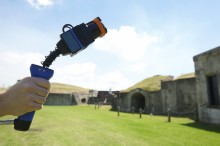
The commercialisation of CSIRO research and technology reached an important milestone last week with agreements being signed in the food, sport and surveying industries. CSIRO has now created more than 150 companies and currently hold interests in around 30. It is also Australia’s largest patent portfolio and issues around 80 licenses each year, many to…
-
Weekly Science Picks
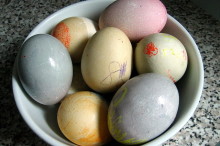
Indeed, it’s Sunday again. But, it’s not only Sunday. It’s Easter for all Christians all over the globe. Happy Easter to everyone! Also, it’s our time to recapitulate what have happened in this week. To be honest, the task was quite challenging, since the science and technology market is highly competitive and unpredictable. Luckily, we…
-
2014 Prime Minister’s Prizes for Science
The Prime Minister’s Prizes for Science are Australia’s national annual awards for recognition of outstanding achievement in science and excellence in science education. Nominations are open to Australian citizens and Australian permanent residents. The five awards are: • The Prime Minister’s Prize for Science (AUD$300,000); • The Frank Fenner Prize for Life Scientist of the…
-
Science & Cooking
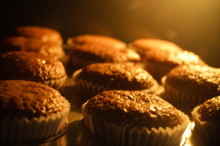
I can hardly think of a more appealing nexus of the sciences, for most of us and for obvious (and delicious) reasons, than food. Add a kind of engineering to the mix, and you get the study of cooking. Back in 2012, we featured the first few lectures from Harvard University’s course Science and Cooking:…
-
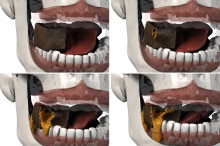
Chocolate bytes with virtual mouth this Easter
Here’s something to chew over. Easter chocolates, along with our favourite everyday foods, could taste just as good but be healthier in future, thanks to new technology that is revealing the science of chewing. CSIRO’s 3D mastication modelling, demonstrated for the first time in Melbourne today, is starting to provide researchers with new understanding of…
-
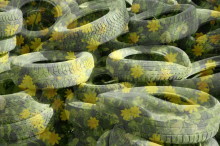
Years of Living Dangerously – the New Series on Climate Change
Ever since Al Gore’s An Inconvenient Truth came out to critical accolades, Conservative scorn and a handful of Oscars, there has been no shortage of well meaning documentaries about the perils of climate change. Most feature a Hollywood celebrity or two, a liberal amount of liberal guilt, and a distinct sense of preaching to the…
-

Weekly Science Picks
Well, it’s Sunday again. It’s our time to recapitulate all the scientific contributions, ideas, events and discoveries that have occurred in this week. To be honest, the job was quite challenging, since the science and technology market is highly competitive and unpredictable. Luckily, we made it. Now we would like to present you top stories…
-

Media Studies: new media and new literacies
Many commentators agree that the field of media studies will become more and more important in the coming years. The European Science Foundation (ESF) publication “Media studies: new media and new literacies” aims to meet the needs of research initiatives in bridging the methodological divides that can exist between the humanities and the social sciences…
-

How a Young Sigmund Freud Researched & Got Addicted to Cocaine
As David Bowie had his cocaine period, so too did Sigmund Freud, beginning in 1894 and lasting at least two years. Unlike the rock star, the doctor was just at the beginning of his career, “a nervous fellow” of 28 “who wanted to make good,” says Howard Markel, author of An Anatomy of Addiction: Sigmund…
-

New tool for galactic archaeology
Reconstructing the history of our Galaxy has just become a whole lot easier, thanks to a team of international astronomers led by Dr Luca Casagrande from the Research School of Astronomy and Astrophysics. By examining both the light and soundwaves from stars, the team has developed a more precise way to deduce the ages of…
-
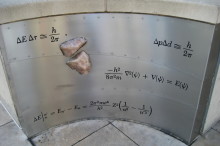
Beautiful Equations
Like many right-brained people, artist and critic Matt Collings finds higher math mystifying, a word that implies both bewilderment and wonder. Faced with the equations that make, for example, Stephen Hawking’s work possible, most of us are left similarly slack-jawed. Collings aptly describes the realm of theoretical physics—which so contradicts our everyday experience—as “an alien…
-

Weekly Science Picks
We have come to the end of one more week and it’s time to summarise what has happened during this week. As usual, the task was quite challenging, but we made it. Here is the review of the most exiting and fascinating news from the world of science and technology. Do coffee and tea really…
-
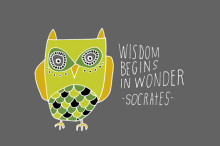
Whatever You Are, Be a Good One
From Tolstoy to Tumblr, a compendium of timeless wisdom on life. In March of 1884, Leo Tolstoy resolved in his diary to create a “circle of reading” for himself, probing “the great philosophers of all time and all people” for wisdom on how to live well. This was the birth of his famous Calendar of…
-

Peak Data – coming to a network near you
CSIRO has released a report on “spectrum crunch” and the role of ubiquitous connectivity in future wireless applications. The threat of ‘peak data’ and what that could mean for the way we connect and access essential services in the future, is the focus of a report released by CSIRO. Director of CSIRO’s Digital Productivity and…