Category: News
-

Our Galaxy’s ‘Geysers’ Are Towers of Power
“Monster” outflows of charged particles from the centre of our Galaxy, stretching more than halfway across the sky, have been detected and mapped with CSIRO’s 64-m Parkes radio telescope. Corresponding to the “Fermi Bubbles” found in 2010, the outflows were detected by astronomers from Australia, the USA, Italy and The Netherlands. The finding is reported…
-

Weekly Science Picks
By now, I think it’s safe to say that if you’re reading this, it means the world didn’t end on Friday. Which is rather a good thing, because a lot of interesting things have been happening recently! Even though I’ve been busy as can be, writing papers and trying to finish off a thesis there…
-

Evolution of flying bat clue to cancer and viruses
The genes of long-living and virus resistant bats may provide clues to the future treatment and prevention of infectious diseases and cancer in people, the Commonwealth Scientific and Industrial Research Organization ( CSIRO), Australia’s national science agency, said in a report on Friday. This research, published in the journal Science, was a global effort involving…
-

Weekly Science Picks
It’s that time again! Time for Weekly Science Picks! Let’s dive in. This is interesting. This could really make things interesting. You just need to read this article on climate change and emissions that appeared in The Australian. It opens up a whole can of worms for debate, which I may tackle later, so feel free…
-

Ocean science robot revolution hits symbolic millionth milestone
An innovative global observing system based on drifting sensors cycling from the surface to the ocean mid-depths is being celebrated by scientists today after reaching a major milestone – one million incredibly valuable ocean observations. 12 December 2012 From 10 drifting robotic sensors deployed by Australia in the Indian Ocean in late 1999, the international…
-
Weekly Science Picks
Science Sunday! Our recurring collection of some of the week’s blogs and science articles that you may have missed. World AIDS Day The month of December begins, as it always does, with World AIDS Day. A day to raise awareness about HIV/AIDS and demonstrate international solidarity in the face of the pandemic. A day to…
-

EPO and SIPO launch Chinese-English machine translation for patents
Brussels, 6 December 2012 — Breaking new ground in providing access to the most comprehensive technological information, the European Patent Office (EPO) and the State Intellectual Property Office of the People’s Republic of China (SIPO) today launched the Chinese-English component of the EPO’s free automatic translation service Patent Translate. As a result, the collections of…
-
SoilMapp: one small step for apps one giant leap for soil science
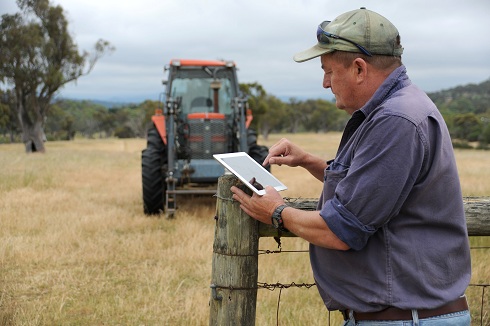
Australia’s national soil databases can now be accessed in real time online through a new iPad app called SoilMapp. The new app provides open access to the best and most up-to-date information for soil at any location in the country within a matter of seconds. Information such as soil depth, acidity, salinity, soil carbon, soil…
-
The Case for Neptune
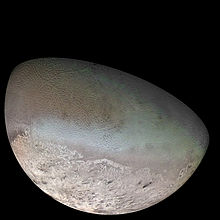
Take a moment to consider Neptune. The eighth planet in our solar system, the planet farthest from the Sun, and the third most massive planet in our solar system. Also one of the least visited, and consequently one of the least understood planets in our solar system. Neptune was discovered in 1846. Forty years later,…
-
Citizen Science
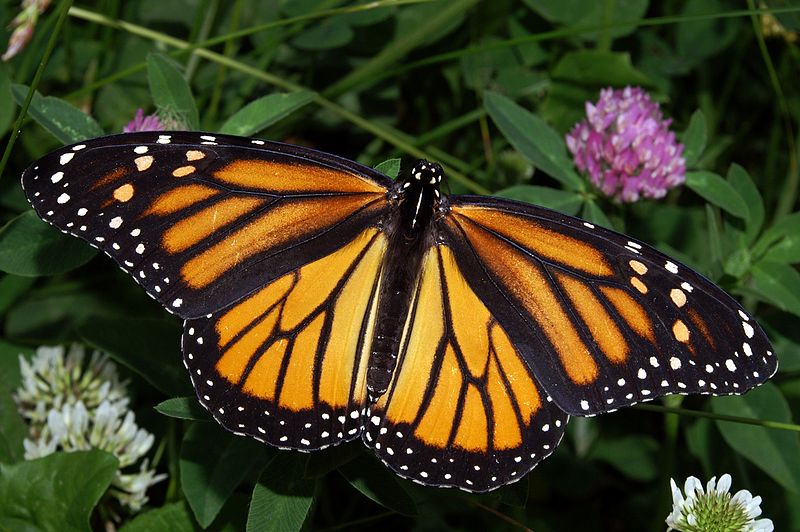
Citizen Scientists An interesting report released last week from the UK Environmental Observation Framework reveals the benefit of citizen scientists to governmental environmental organisations. The Nerc Centre for Ecology and Hydrology and the Natural History Museum in London, reviewed 234 projects – ranging from small surveys to large-scale programmes. The results found the involvement of volunteers offers “high…
-
Turn Back Time
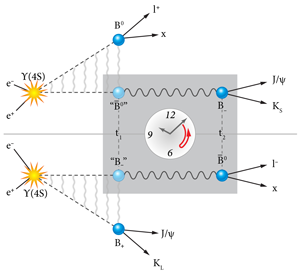
Recall the outrageously cool movie from the 1980s, Back to the Future? Marty McFly and Doc Brown were stretching scientific boundaries, righting the future, all while making sure not to meet their future selves. Fast-forward and time travel may be closer than we think. (Close, relatively speaking of course.) If you like exceptions to the…
-

Victoria Prize for Science and Innovation awarded
Thursday 22 November 2012 Minister for Innovation, Services and Small Business Louise Asher today announced that two world leaders in storm-water management and bioinformatics, Professors Ana Deletic from Monash Water for Liveability and Terence Speed from the Walter and Eliza Hall Institute, have won the 2012 Victoria Prize for Science and Innovation. Professor Deletic is…
-
Queensland competition winner touring CSIRO’s research vessel
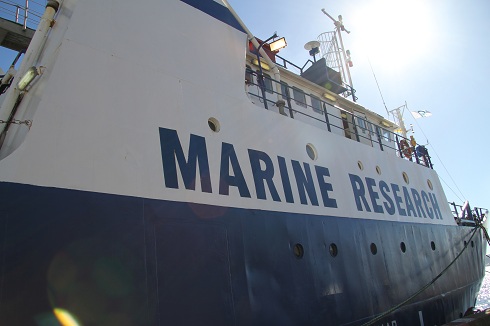
Nearly three years ago a 10-year-old Queensland primary school student beat the rush of entries in a national competition to find a name for Australia’s new Marine National Facility research vessel. The Federal Minister for Science deemed Clare Cameron’s entry, The Flinders Investigator, the joint winner as it linked the planned A$120 million research vessel to…
-
New Internet Exchange Point Launched 16 November in Kinshasa, Democratic Republic of the Congo
[Washington, D.C. and Geneva, Switzerland] — A new Internet Exchange Point (IXP) was launched on 16 November in Kinshasa, Democratic Republic of the Congo (DRC). The Kinshasa IXP (KINIX) was funded through the Internet Society’s Community Grants Programme and managed by the DRC ISP Association (ISPA-DRC), as part of its DRC-IX project, which aims to…