Author: Editorial Board
-
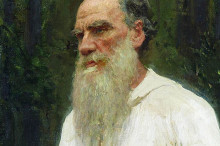
Study Finds That Reading Tolstoy & Other Great Novelists Can Increase Your Emotional Intelligence
A new study published this month in Science concludes that you may get something unexpected from reading great literary works: more finely-tuned social and emotional skills. Conducted by Emanuele Castano and David Comer Kidd (researchers in the psych department at the New School for Social Research), the study determined that readers of literary fiction (as opposed to popular fiction or non-fiction)…
-
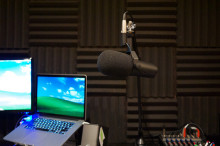
The Podcast Project: a tool for fun and sustainable language learning
A bad night´s sleep, a nervous stomach and sweaty hands. This scenario that students typically face before their obligatory English exam may be a thing of the past at the University of Wismar, Germany. Since June 2012, over 90 students from various degree programmes have produced podcasts – or vodcasts – as part of their…
-
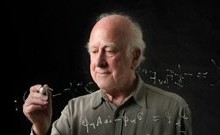
Peter Higgs awarded Nobel Prize in Physics
King’s College London is celebrating the award of the 2013 Nobel Prize for Physics to its alumnus, Fellow and Honorary Doctor Professor Peter Ware Higgs CH CBE FRS FRSE FKC, jointly with François Englert. The award is the 11th Nobel Prize awarded to a member of King’s or its associated institutions, and it also highlights…
-

Does my virtual forehead look big in this?
The days of stalling online purchases in fear of products “not quite looking like they did on the model” could soon be out of fashion according to new research by Aussie scientists. CSIRO, Australia’s national science agency, today announced it has filed a series of patents for its new Smart Vision research. Enhancing the ‘virtual…
-
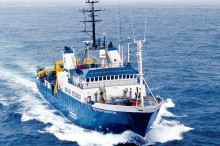
Australia’s Marine National Facility to farewell its research vessel Southern Surveyor
The Director of the Marine National Facility, Mr Ron Plaschke, said the research achievements onboard Southern Surveyor have not only been to Australia’s benefit, but also understanding the global importance of our surrounding seas and oceans. “Southern Surveyor has made a major contribution to Australia’s blue-water research effort,” Mr Plaschke said. On board Southern Surveyor, scientists from a diverse range of…
-

Interview: Lana Ostojic, an applied scientist in the field of forensic biology
Lana Ostojic is a young applied science professional with the real-world experience in criminal forensics. She is a researcher at the Research and Development Department at the Office of Chief of Medical Examiner (OCME), NYC. Lana is also a PhD candidate at the University of Belgrade, Faculty of Molecular Biology and Physiology. Her primary field…
-

World authority leads ocean energy research
One of the world’s authorities on offshore oil spill countermeasures has taken the helm of CSIRO’s Wealth from Oceans National Research Flagship. Dr Ken Lee will head a multidisciplinary team of over 200 CSIRO scientists and technical staff to provide the science to support the healthy and sustainable coexistence of the ocean energy industry with…
-

New study finds one in three jobs in Europe generated by IPR-intensive industries
The European Commission welcomed the publication of the first-ever EU-wide study of the impact of Intellectual Property Rights (IPR) on the European economy in terms of GDP, employment, wages and trade. Carried out jointly by the Office for Harmonization in the Internal Market (OHIM) acting through the EU Observatory on Infringements of Intellectual Property Rights…
-
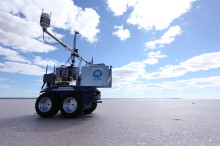
Outback Rover helps sharpen satellite signals
A prototype autonomous vehicle, or rover, developed by CSIRO is helping scientists improve the accuracy of Earth observation satellites that provide valuable data to our mining and agricultural industries. Just as the Mars Rover Curiosity is gathering information about our neighbouring planet, CSIRO’s affectionately nicknamed ‘Outback Rover’ is helping to calibrate satellites that provide clues…
-
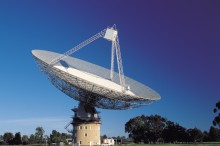
Astronomers find missing link pulsar
An international team of astronomers has used X-ray telescopes in space and ground-based telescopes, including two of CSIRO’s, to identify a pulsar that switches between emitting X-rays and emitting radio waves. This is the first direct evidence of one kind of pulsar turning into another. An international team of astronomers using CSIRO radio telescopes and…
-
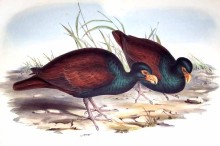
Saving Australia’s Dodo
The legendary Dodo bird was lost to the world in the 1600’s, when it was hunted to extinction on the island of Mauritius, but few Australians would realise that a flightless island bird here has narrowly avoided the same fate – thanks to an amazing story of dedication, skill and cooperation. The Woodhen: A Flightless…
-

Seeing more than carbon for the trees
Schemes that offer economic incentives for growing trees for carbon present an opportunity to reverse trends in land clearing but also to restore ecosystem services – such as pest control, pollination, soil and water conservation. ‘Best practice’ carbon farming that considers more than just the carbon in trees is needed if the full benefits of…
-

Circadian Neuroscientist from the University of Oxford Explains: Why do we sleep?
Russell Foster is a circadian neuroscientist: he studies sleep and its role in our lives, examining how our perception of light influences our sleep-wake rhythms. And he asks: What do we know about sleep? Not a lot, it turns out, for something we do with one-third of our lives. In this talk, Foster shares three popular…
-
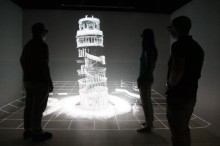
3D Mapping a ‘Pisa’ Cake by Australian Scientists
Australian researchers have created the first ever interior 3D map of Italy’s iconic Leaning Tower of Pisa by using a breakthrough mobile laser mapping system. Developed by the CSIRO, Australia’s national science agency, the Zebedee technology is a handheld 3D mapping system incorporating a laser scanner that sways on a spring to capture millions of…