Author: Editorial Board
-
Australia’s consumption of natural resources – a report
By Heinz Schandl, Senior Science Leader and Thomas Wiedmann, Associate Professor at University of New South Wales For some time Australians have been considered among the biggest consumers of natural resources in the world. According to previous studies, we each get through 70 tonnes of materials every year. This is way higher than other developed nations. But could something be influencing…
-
Feynman Lectures on Physics: The New Online Edition as HTML5
Caltech and The Feynman Lectures Website have joined forces to create an online edition of Richard Feynman’s famous lectures on physics. First presented in the early 1960s as part of a two-year introductory physics course given at Caltech, the lectures were eventually turned into a book that became a classic reference work for physics students, teachers and researchers.…
-

The First Science Promotion Conference in Southeast Europe
If you happen to be in Europe this October, you probably wouldn’t like to miss the First Regional Science Promotion Conference on October 2 and 3, 2013 in Belgrade, Serbia (Southeast Europe). The Center for the Promotion of Science (CPN), under the UNESCO patronage, is hosting the First Regional Science Promotion Conference with the aim of…
-

Stanford’s Virtual Human Interaction Lab
Go behind the scenes and take a virtual tour of Stanford’s Virtual Human Interaction Lab. The lab aims to research psychological experimentation in the virtual world, according to Associate Professor of Communication Jeremy Bailenson. “We integrate three virtual senses in a way that’s very psychologically persuasive — sight, sound and touch. The state-of-the-art lab also…
-
A Planetary Perspective: With Landsat and Google Earth Engine
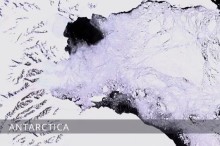
Since July 1972, NASA’s Landsat satellites have gathered images over the entire land surface of the Earth, creating the most complete record ever assembled. These images, archived at USGS, reveal dynamic changes over time due to human activity (deforestation, urbanization) and natural processes (volcanic eruptions, wildfire). Now, Google Earth Engine allows scientists, researchers and the…
-
Chomsky Calls Postmodern Critiques of Science Over-Inflated “Polysyllabic Truisms”
In the interview video below, Chomsky makes a blanket critique of what the interviewer calls the “left criticism of science” as imperialist, racist, sexist, etc. His answers shed quite a bit of light on what Chomsky perceives as the political ramifications of postmodern thought as well as the origins of the discourse. In his critique,…
-
Plasma-treated nano filters help purify world water supply
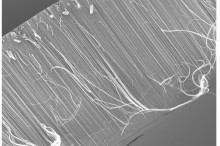
The study paves the way for the next generation of portable water purification devices, which could provide relief to the 780 million people around the world who face every day without access to a clean water supply. An international team of researchers – led by Associate Professor Hui Ying Yang from Singapore University of Technology…
-

Australia’s big broadband ‘app-ortunity’
Alarms which send you mobile alerts warning of smoke detected in your house and tele-health systems which help to measure home-based breathing exercises for patients suffering from chronic disease are just some of the potential applications available over next generation broadband networks, according to a new report released today by the Australian Centre for Broadband…
-
CSIRO telescope marks 25 years of success
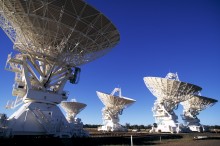
One of the world’s most successful astronomy observatories, CSIRO’s Australia Telescope Compact Array near Narrabri, NSW, turns 25 years of age on 2 September. The Universe is a huge natural laboratory and astronomers study it to observe nature at its most extreme. “Every possible experiment is being played out somewhere in the Universe,” said Dr Jamie…
-
The Forgotten Home of Coffee
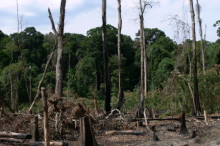
Coffee is one of the world’s favourite drinks, one of the most important commercial crop-plants, and the second most valuable international commodity; Arabica coffee is considered to produce the finest coffee beans. Production of coffee helps support the livelihood of 25 million farming families around the world and it is estimated that around 32 pairs of…
-
Pulsars make a GPS for the cosmos
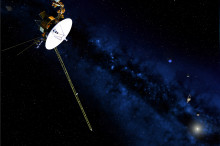
CSIRO scientists have written software that could guide spacecraft to Alpha Centauri, show that the planet Nibiru doesn’t exist … and prove that the Earth goes around the Sun. Dr George Hobbs (CSIRO) and his colleagues study pulsars — small spinning stars that deliver regular ‘blips’ or ‘pulses’ of radio waves and, sometimes, X-rays. Usually…
-

The Psychology of First Impressions
Though one must not judge a book by its cover, a job candidate only has thirty minutes to prove his or her worth to a hiring manager. Thus an interviewee’s cover must be able to represent the qualifications and potential that lies within. Since the job market is full to the brim, it is not…
-
Reading pleasure and e-tools
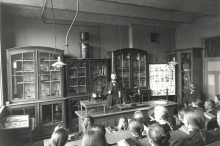
It happens all too often: as soon as we leave our early childhood behind and cross the borderline between primary and secondary education, we lose all or part of our interest in books. From the age of 12-14 children’s visits to the public library, for instance, drop dramatically, leaving those who keep reading a minority.…
-
Soil carbon ‘blowing in the wind’
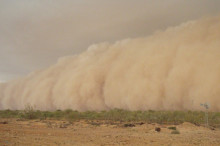
Australian soils are losing about 1.6 million tonnes of carbon per year from wind erosion and dust storms affecting agricultural productivity, our economy and carbon accounts, according to new research. Top soil is rich in nutrients and carbon but is increasingly being blown away by events such as the ‘Red Dawn’ in Sydney in…