Category: News
-
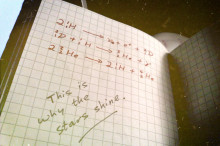
Weekly Science Picks
It’s Sunday again. Time for some science-y goodness from around the globe!! Mouse eats scorpion, feels no pain. The discovery that a type of mouse feels no pain from scorpion venom has revealed a new strategy for developing pain-killing drugs. Hubble to get boost from gravitational lensing Astronomers are attempting to boost the imaging prowess…
-

Reddit: Google’s Semantic Data-Mining Opportunity
Look at this perfectly looped image sequence. It’s link building, chain making, Futurama, factory… it’s satisfying, and hypnotic. Google, however, won’t be able to link these concepts well enough unless it’s fed structured semantic data. They must find creative ways to correlate “strings” and understand “things” as webmasters don’t always have a habit of structuring…
-
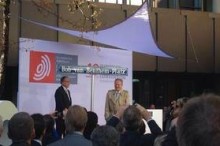
European Patent Convention celebrates 40th anniversary
At a celebration attended by Herman Van Rompuy, President of the European Council, the European Patent Office marked the 40th anniversary of the European Patent Convention (EPC). On 5 October 1973, the EPC was signed in Munich, establishing a legal framework for the transnational grant of patents in Europe. The Convention was inspired by the vision of a group…
-
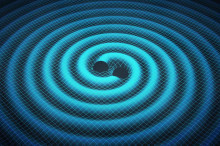
Gravitational waves “know” how black holes grow
A paper in recent issue of the journal Science [18 October] pits the front-running ideas about the growth of supermassive black holes against observational data — a limit on the strength of gravitational waves from pairs of black holes, obtained with CSIRO’s 64-m Parkes radio telescope in eastern Australia. The study was jointly led by…
-
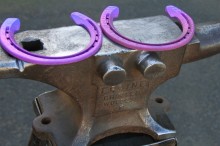
3D printed horseshoe to improve racing performance
CSIRO scientists have custom made and 3D printed a set of titanium shoes for one Melbourne race horse in a first for the sport. The horse, dubbed by researchers as ‘Titanium Prints’, had its hooves scanned with a handheld 3D scanner this week. Using 3D modelling software, the scan was used to design the perfect…
-
Weekly Science Picks
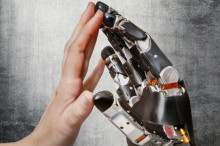
I’m loath to begin a weekly roundup on a low note, and I’m truly sorry to have to, but this most certainly needs to be discussed. It’s been a turbulent week this week in the science blogging world. Turbulent and full of raised concerns over the state of things for those in a science communication…
-
Brain Control Interfaces – The Future of Computing
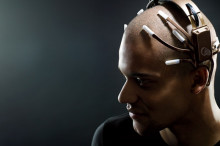
Twenty years ago we could never imagine using computers as extensively in our daily lives as we do today. With technology evolving at such a fast pace, what could possibly be next? Many believe that brain control interfaces (BCI) are the future of computing – that’s right, we could soon be controlling computers with the…
-

Herbicide runoff reduced by 90 per cent in Great Barrier Reef sugarcane crops
An innovative new approach to sugarcane plantation weed management trialled in select Great Barrier Reef (GBR) catchments have shown a dramatic 90 per cent reduction in runoff of highly soluble herbicides into waterways. In the lower Burdekin region of northern Australia, scientists from CSIRO’s Water for a Healthy Country Flagship trialled a new technique for…
-
Australia and India to collaborate on clean fuel production
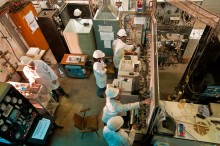
In a time when Australia’s liquid transport fuel supplies are declining and our transport needs are growing, a research partnership between Australia and India could provide a solution to a number of energy concerns and ultimately reduce the reliance of both countries on imported fuels. The widespread introduction of a clean-burning synthetic fuel, dimethyl ether…
-
What Can Happen if You Say NO, Thank You And You Are a Science Writer?
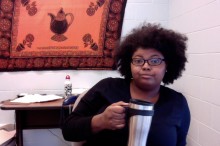
This weekend happened something that attracted our attention. Namely, Danielle N. Lee, Ph.D, the Urban Scientist blogger at Scientific American, has been mistreated twice: once by the blog editor at biology-online.org and now by SciAm itself. The blog editor asked Dr. Lee to contribute a blog post at Biology-Online, and when she declined, the blog…
-
Weekly Science Picks
Welcome to this edition of Weekly Science Picks! Here’s a great little story to get us started about how one scientist found out about his Nobel Prize win this past week. He doesn’t carry a mobile. Prof Peter Higgs did not know he had won Nobel Prize by BBC News Nobel Prize-winning scientist…
-
Study Finds That Reading Tolstoy & Other Great Novelists Can Increase Your Emotional Intelligence
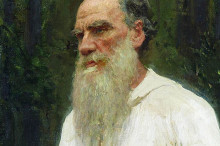
A new study published this month in Science concludes that you may get something unexpected from reading great literary works: more finely-tuned social and emotional skills. Conducted by Emanuele Castano and David Comer Kidd (researchers in the psych department at the New School for Social Research), the study determined that readers of literary fiction (as opposed to popular fiction or non-fiction)…
-
The Podcast Project: a tool for fun and sustainable language learning
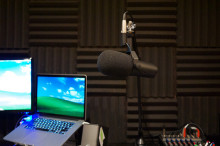
A bad night´s sleep, a nervous stomach and sweaty hands. This scenario that students typically face before their obligatory English exam may be a thing of the past at the University of Wismar, Germany. Since June 2012, over 90 students from various degree programmes have produced podcasts – or vodcasts – as part of their…
-
Peter Higgs awarded Nobel Prize in Physics
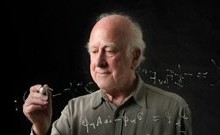
King’s College London is celebrating the award of the 2013 Nobel Prize for Physics to its alumnus, Fellow and Honorary Doctor Professor Peter Ware Higgs CH CBE FRS FRSE FKC, jointly with François Englert. The award is the 11th Nobel Prize awarded to a member of King’s or its associated institutions, and it also highlights…