Author: Markus
-

Weekly Science Picks
It is with a heavy heart that I must say, this is my final set of Weekly Science Picks here on Australian Science. In fact, it’s to be the final set of Weekly Science Picks. Unfortunately, running a site like this one is a costly affair, and it’s been an honour to be a writer…
-
Weekly Science Picks
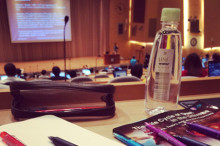
Well, it’s my turn to pick my favourite science news this week on Australian Science. And I must apologise for being slightly late with this. The reason is that I’ve only just got home to Tokyo after spending all week in Taipei for a conference on interstellar dust! As with any good conference, it’s been…
-

Weekly Science Picks
I’m loath to begin a weekly roundup on a low note, and I’m truly sorry to have to, but this most certainly needs to be discussed. It’s been a turbulent week this week in the science blogging world. Turbulent and full of raised concerns over the state of things for those in a science communication…
-
Weekly Science Picks
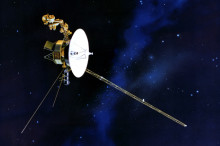
Hello everyone. I hope you’ve all had a good week! It’s a balmy Autumn evening here in the UK where I sit as I write this – and I must say, this week’s science picks include something quite historic… Anyone with half an eye on the science news recently should know by now that it’s…
-

Weekly Science Picks
After the Perseid meteor shower last weekend, it seems that lots of exciting things have been discussed this week. Here are a few of the things which caught my eye. The first of my picks is homegrown here on Australian Science, if you’ll pardon the pun. A sustainable food source for space travellers and…
-
Weekly Science Picks
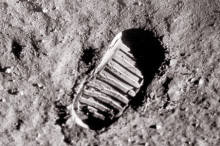
I hope everyone’s enjoying a nice weekend! It’s my turn again for the weekly science picks, and this week is the 44th anniversary of the Apollo 11 moon landing. On July 20th 44 years ago, human beings took their first small steps onto the surface of an object in the solar system other than the…
-
Pacific plant could be good news for anxiety sufferers
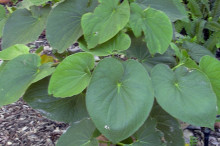
A clinical study on kava, a Pacific plant, has found that it has properties which could be extremely useful in treating the symptoms of anxiety. The plant has been used recreationally in Pacific societies, in places like Polynesia and Hawaii, for a long time but this is apparently the first proper clinical study of the…
-
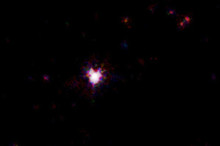
Explosions visible from across the Universe
Gamma ray bursts are the most violent and energetic events in the entire universe. Powerful blasts of high energy gamma radiation, bright enough to be seen from literally the very edge of the visible Universe. And yet, we know surprisingly little about them. Of course, we have theories, but every now and again astronomers spot…
-
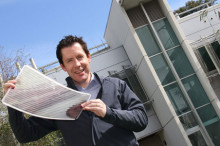
Printed solar cells as easy to produce as t-shirts!
Australia is really taking the initiative in alternative energy production. The latest news is that a consortium of Australian researchers have succeeded in producing printable solar cells, in a process which might just have the potential to revolutionise solar power production across the continent. Perhaps, we can only hope, the world. Succinctly, a new printer…
-

Weekly Science Picks
I hope everyone’s had a good week! Personally, mine’s been rather tiring, having to take care of various academic shenanigans and with plenty to write about. And I have a couple of research fellowships still to apply for. Eek! But enough about me, because there have been some genuinely exciting things happening in science over…
-
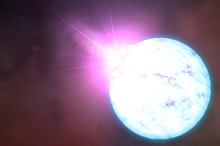
Neutron star glitch needs new theories to explain it
Neutron stars are some of the strangest and least understood objects in the entire Universe. Over 1.5 times the mass of our whole solar system, squeezed into an object comparable in size with a city, these curious objects wield titanic gravitational fields and, often, immense magnetic fields. They’re also so incredibly dense that it’s difficult…
-
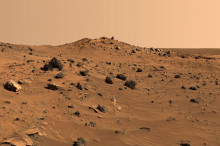
What do Mars and Australia have in common?
If you’re expecting a punchline to that title, then guess again. It’s no joke. Surprisingly, Australia shares some remarkably similar geology to our neighbouring planet. Specifically the Red Centre, the arid heart of Australia, is the most Mars-like place on Earth! It’s possible that people may have mused on the similarities already. After all, with…
-

Wind power: renewable energy for the cities of the future
Renewable energy? I’m a big fan! Unfortunately, so are modern wind turbines, which are the subject of intense arguments and criticism despite their many benefits. However, this view might be changed somewhat, by a new innovation by Farzad Safaei at the University of Wollongong (UOW) – a new type of wind turbine known as PowerWINDows. I’m…
-

Weekly Science Picks
Greetings one and all, and a very happy science Sunday to you! This week’s generally been quite interesting. We’ve had good news, bad news, a little heated discussion… All the kind of things which keep the science community vibrant and interesting. As for specifically what that news was, well. Please do read on… First…