Tag: astrobiology
-
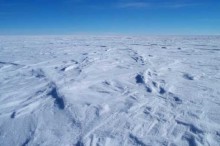
Lake Vostok and the search for extraterrestrial life
When Russian geographer and Antarctic explorer Andrey Kapitsa travelled to Vostok Station in 1959 he was looking for evidence of a subglacial lake that was first proposed by Russian scientist Peter Kropotkin at the end of the 19th century. Whilst Kropotkin was not able to specify the location of subglacial lakes, he theorised that masses…
-
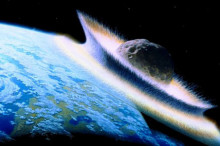
Asteroids, extinctions, and biodiversity: Wiping the slate clean for new life to flourish
The recent meteor strike in Russia has been a rather sobering reminder that Earth has been regularly battered during its history, by space rocks. Actually, the amount of meteoritic material constantly landing on Earth is startling – on average, over 100 tons every day which we don’t even notice. Now, most of that is in…
-
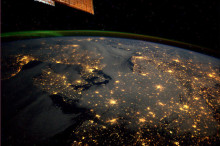
Interstellar travel: how to spot a ‘starman’ going by
Massive objects moving at near light speeds do not occur naturally in the universe as we know it. If we detect such objects it is a reasonable to assume they are artificial artifacts from advanced intelligent life. This according to Garcia-Escartin and Chamorro-Posada, authors of a recent paper, is a low-cost, sure-fire way of searching…
-

Searching for Life on Titan
Discovered in 1655 by Dutch astronomer Christiaan Huygens, Titan is one of Saturn’s 62 moons, named for a race of giants in Greek myth who were Saturn’s brothers and sisters. Over 5000 km in diameter, it’s roughly twice the size of our own Moon and is one of the largest moons in our solar system,…
-
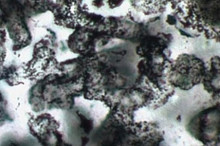
The Oldest Fossils in the World
Life has existed on planet Earth for a long time. Precisely how long, however, is a question which many are still searching for an answer to. The most recently discovered piece in that puzzle may put us another step closer to finally answering that. Discovered in Pilbara, Western Australia, are what are quite probably the…
-

Weekly Science Picks
It seems the rate of everything has increased exponentially. A very bold, vague, yet intriguing statement, you might say. During the course of the past 2 weeks, Hurricane Sandy devastated the East Coast of America, followed closely by a nor’easter. So my science picks for this week center on the themes of natural disasters, planning,…
-
Does my science look big in this? The astrobiology edition
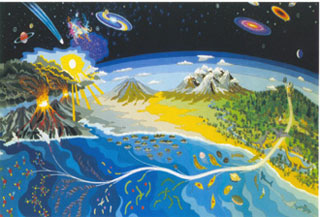
During the 20th century a powerful new idea gradually entered our consciousness and culture: cosmic evolution. We are all par of a huge narrative: a cosmos billions of years old and billions of light years in extent. It is this idea that caught my attention this month via the proceedings of the Sao Paulo Advanced…
-

Weekly Science Picks
It’s been an interesting week for science news, and I’ve been lucky enough to be asked to give this week’s science picks! This made me spend a little while sipping contemplatively on a cup of vanilla iced coffee and wondering where to even start… The articles I’ve selected are, of course, slanted towards my own…
-
Mysterious Mars
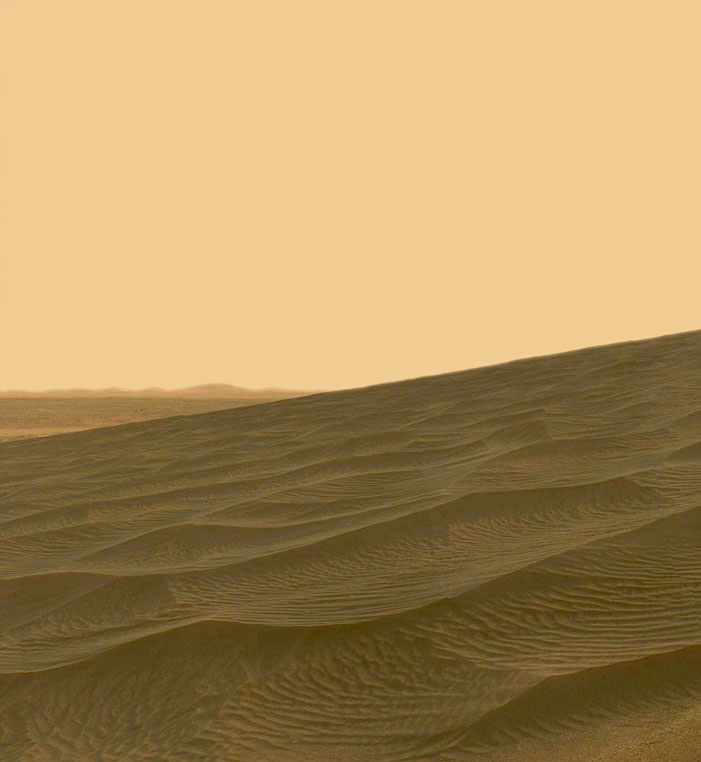
Mars is full of secrets and mysteries. The classic definition of a desert world, our planet’s arid sibling is a parched wilderness of dunes and planetwide dust storms. With a thin carbon dioxide atmosphere and only 38% the gravitational pull of Earth, there are a lot of puzzles about this cold and frosty little planet,…
-
Did life’s building blocks crash land?
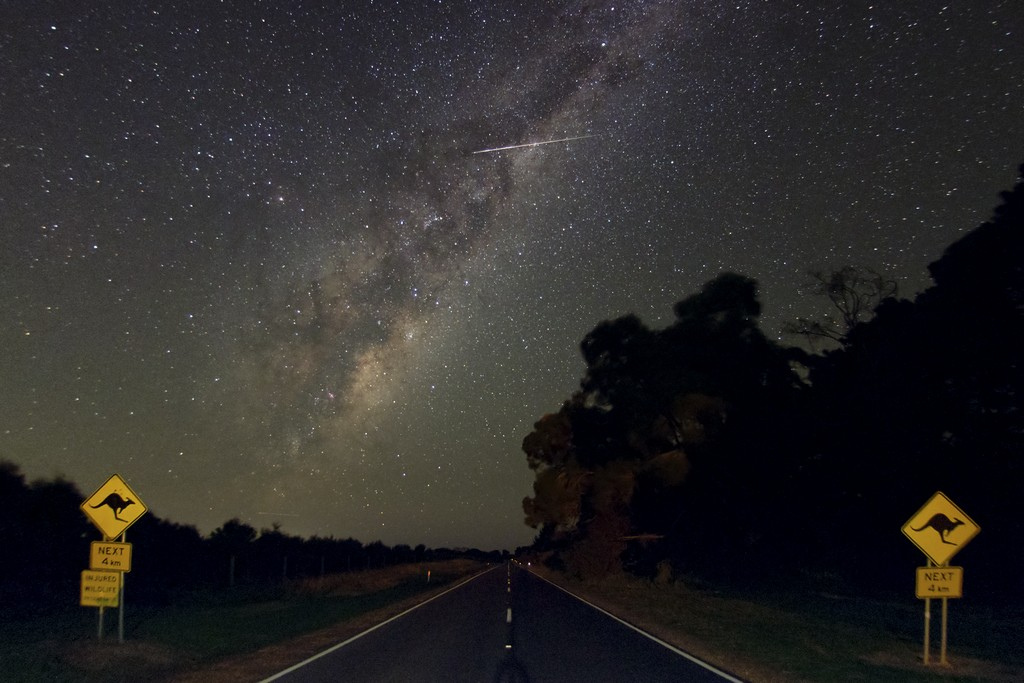
In 1969, on September 28, the skies near Murchison, Victoria (not to be confused with Murchison, Western Australia) were illuminated by a dramatic sight. A spectacular fireball blazed its way through Earth’s atmosphere, its outer layers heated to extreme temperatures by its speed. Residents of the town reported seeing the fireball split into three pieces…