Tag: astronomy
-

Weekly Science Picks
Well, it’s my turn to pick my favourite science news this week on Australian Science. And I must apologise for being slightly late with this. The reason is that I’ve only just got home to Tokyo after spending all week in Taipei for a conference on interstellar dust! As with any good conference, it’s been…
-
Weekly Science Picks
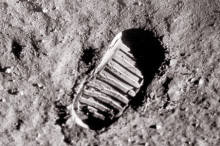
I hope everyone’s enjoying a nice weekend! It’s my turn again for the weekly science picks, and this week is the 44th anniversary of the Apollo 11 moon landing. On July 20th 44 years ago, human beings took their first small steps onto the surface of an object in the solar system other than the…
-
Explosions visible from across the Universe
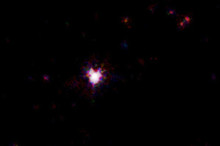
Gamma ray bursts are the most violent and energetic events in the entire universe. Powerful blasts of high energy gamma radiation, bright enough to be seen from literally the very edge of the visible Universe. And yet, we know surprisingly little about them. Of course, we have theories, but every now and again astronomers spot…
-
Weekly Science Picks
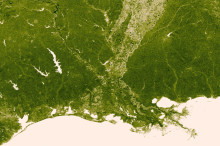
A happy Science Sunday to everyone! As usual there’s been a lot happening in the world of science, so lets take a peek of the most interesting picks for the past week! Interface Region Imaging Spectrograph (IRIS) to launch! At the end of this month, NASA will launch IRIS. IRIS will watch the Sun and…
-
Neutron star glitch needs new theories to explain it
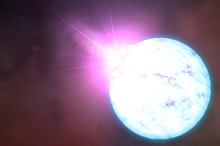
Neutron stars are some of the strangest and least understood objects in the entire Universe. Over 1.5 times the mass of our whole solar system, squeezed into an object comparable in size with a city, these curious objects wield titanic gravitational fields and, often, immense magnetic fields. They’re also so incredibly dense that it’s difficult…
-
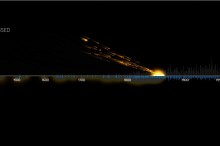
An Animated Visualization of Every Meteorite Since 861 AD
Carlo Zapponi is data visualization designer at Nokia, who has created an amazing animation of the meteorites that have struck the earth. Only 3% of all recorded meteorites were seen falling since 861 AD. 34,513 have been recorded, only 1,042 have been seen falling. Now you can click any of the fallen meteorites at the image below, also…
-

Weekly Science Picks
Greetings one and all, and a very happy science Sunday to you! This week’s generally been quite interesting. We’ve had good news, bad news, a little heated discussion… All the kind of things which keep the science community vibrant and interesting. As for specifically what that news was, well. Please do read on… First…
-

Weekly Science Picks
It’s been rather a turbulent week, all told. There’s been a lot going on in the news, both good and bad. Hopefully, this little handful of science news items will help you finish the last week and begin this next one on a lighthearted note! NASA’s Kepler mission has found a star system which…
-
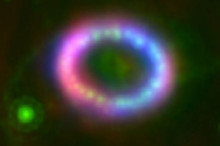
A Supernova Post-Mortem in Radio Waves
It was a late February night in 1987 when, standing on top of a Chilean mountain range, Ian Shelton saw something which no one had seen for centuries. Looking up in disbelief, he watched a star explode some 160 thousand light years away. Rushing to another observatory to check with someone else, he was initially…
-
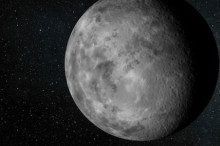
It’s a small world after all
What we know of exoplanets has developed at the same time as the technology which we use to discover them. This is, in my opinion, the most exciting thing about the entire field of study. For instance, when we first started spotting planets around alien suns, we found huge gas giants. Hot jupiters, extremely massive…
-
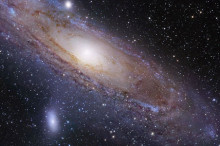
Andromeda and the 13 Dwarfs
Astronomy is quite notorious for being full of things we don’t entirely understand. Sometimes it really does feel as if the closer we look at the Universe, the less it makes sense. One thing in particular which seems to constantly evade our understanding is the way in which galaxies work. A lot of very smart…
-

Searching for Life on Titan
Discovered in 1655 by Dutch astronomer Christiaan Huygens, Titan is one of Saturn’s 62 moons, named for a race of giants in Greek myth who were Saturn’s brothers and sisters. Over 5000 km in diameter, it’s roughly twice the size of our own Moon and is one of the largest moons in our solar system,…
-
Telescope takes temperature of Universe
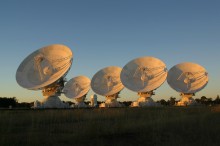
CSIRO telescope takes temperature of Universe Astronomers using a CSIRO radio telescope have taken the Universe’s temperature, and have found that it has cooled down just the way the Big Bang theory predicts. Using the CSIRO Australia Telescope Compact Array near Narrabri, NSW, an international team from Sweden, France, Germany and Australia has measured how…
-
Weekly Science Picks
Another week, another collection of weekly science picks! Those of us over here in Northern Europe have been enjoying snowy weather this past few days, with more expected on the way. At the same time, many of us have been keeping a concerned eye on the recent events in Australia – the bush fires being…