Tag: australia
-
The Future of Solar Power Technologies in Australia
As the cost of fossil fuels go up around the world, and the impact of climate change becoming increasingly avoidable, people are looking for reliable, alternative sources of energy. With the favourable climate in Australia, it’s a no-brainer that solar power is the way forward. But gone are the days of inefficient panels at extraordinary…
-

Weekly Science Picks
It is with a heavy heart that I must say, this is my final set of Weekly Science Picks here on Australian Science. In fact, it’s to be the final set of Weekly Science Picks. Unfortunately, running a site like this one is a costly affair, and it’s been an honour to be a writer…
-
Could Australian Terrain Help Train Future Mars Explorers?
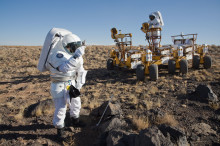
How do you rehearse for a Martian space trip? Simulations can only bring astronauts so far when they’re figuring out a mission. A typical person training for the International Space Station can expect a combination of classroom work, spacewalk rehearsals in the water, and robotic arm training using articles that are very close to the…
-

Quantum computing: Australian researchers store data on a single atom!
Computers are everywhere these days. They play us music, tell us when to wake up, remind us that we’re late for an appointment, and provide us with entertainment. Even if we don’t realise it, so ingrained in our lives are computers that the world would be a very different place without them. Computing is also…
-

Seriously, NAPLAN to include Science?
In the last few weeks in Australian politics there have been critical discussions regarding the inclusion of science in NAPLAN (the National Assessment Program in Literacy and Numeracy). Without entering too much into the debate regarding the reported advantages or disadvantages of NAPLAN, it is heartening to hear that science is at the forefront of political…
-
A Supernova Post-Mortem in Radio Waves
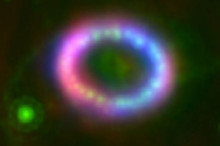
It was a late February night in 1987 when, standing on top of a Chilean mountain range, Ian Shelton saw something which no one had seen for centuries. Looking up in disbelief, he watched a star explode some 160 thousand light years away. Rushing to another observatory to check with someone else, he was initially…
-
The Carbon Footprint of Australian Migrations
Measuring the impact of Australian migration on the Australian carbon footprint is a difficult task because of the complexity of the factors involved. However, a direct cause and effect relationship between the two exists, and it is related partially to population growth due to overseas migration, as well as to rural-urban migrations. Both of which…
-
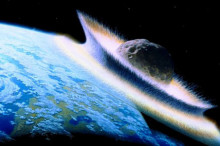
Asteroids, extinctions, and biodiversity: Wiping the slate clean for new life to flourish
The recent meteor strike in Russia has been a rather sobering reminder that Earth has been regularly battered during its history, by space rocks. Actually, the amount of meteoritic material constantly landing on Earth is startling – on average, over 100 tons every day which we don’t even notice. Now, most of that is in…
-
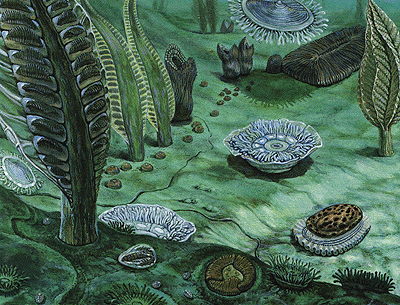
Ediacara: a “failed” evolutionary experiment?
The Ediacara Hills, north of the city of Adelaide in South Australia are a tumbling mass of ancient rocks. Sunbaked now, 580 million years ago they were a sea alive with soft-bodied organisms. These organisms varied greatly: from millimetres to metres in size; from “blob-like” to intricate in complexity; and from sturdy and resistant to…
-

Rare echidna species not so extinct after all?
Speaking as a European, Australia has something of a reputation for having some rather unusual wildlife. Easily the most unusual are the small handful of monotreme species – the echidnas, and the duck-billed platypus. The only species of egg-laying mammals in the world today, these little creatures may once have been quite widespread. Now, however,…
-

Could the next generation of electronics be made with graphene?
While it may look like little more than molecular chicken wire, graphene really is wonderful stuff. A sheet of carbon atoms naturally forms into a geometrically perfect set of hexagons and, since it was first chemically synthesised in 2004, researchers across the world have been investigating its potential for uses in a wide variety of…
-

New leader of CSIRO Astronomy and Space Science division
CSIRO’s astronomy, spacecraft tracking and space science activities will be headed up by a new leader, with the announcement today that Dr Lewis Ball has been appointed as the incoming Chief for CSIRO’s Astronomy and Space Science (CASS) division. Dr Ball returns to CSIRO from his present role as Deputy Director at the Atacama Large…
-

Research gives digital economy a boost
CSIRO will today launch Australia’s largest publically-funded research initiative focused on the digital economy. The Digital Productivity and Services Flagship, CSIRO’s tenth National Research Flagship, is a A$40 million research initiative focusing on the services sector and optimising the full value of national broadband infrastructure. The Digital Productivity and Services Flagship, CSIRO’s tenth National Research…
-
Australian scientists may have found ‘potential cure for AIDS’
Australian scientists say they have made a breakthrough that could lead to a potential cure for AIDS, modifying a protein in HIV so it prevents against replication and instead protects against the infection. A FORM of gene therapy developed by researchers at the Queensland Institute of Medical Research may provide hope to sufferers of HIV,…