Category: Research
-

Internet Society: Global Internet User Survey Reveals Attitudes, Usage, and Behavior
A worldwide survey of more than 10,000 Internet users in 20 countries conducted by the Internet Society revealed attitudes towards the Internet and user behavior online. The Global Internet User Survey is one of the broadest surveys of Internet user attitudes on key issues facing the Internet. This year’s survey covered areas such as how…
-
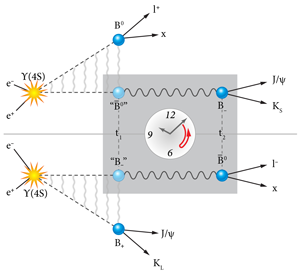
Turn Back Time
Recall the outrageously cool movie from the 1980s, Back to the Future? Marty McFly and Doc Brown were stretching scientific boundaries, righting the future, all while making sure not to meet their future selves. Fast-forward and time travel may be closer than we think. (Close, relatively speaking of course.) If you like exceptions to the…
-
Weekly Science Picks
Ah, the weekend! Time to kick back, relax, and look back over everything that’s happened over the past few days. And I’m rather happy to say that some quite interesting things have happened, including the Leonid meteor shower which peaked on Friday night (though if you step outside after dark and watch the sky, you…
-
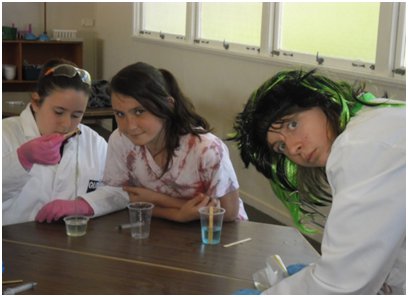
The Gender Myth and Science. Our Response at SC@M
Girls are just not as good at science as boys. Men do hard sciences, women do soft sciences. Gender stereotypes have existed long-term throughout the spectrum of sciences. Most people have witnessed it first-hand. Patients question expert female doctors, yet implicitly trust their male counterparts. Laboratories are full of female scientists with male leads. Why…
-

First research to successfully predict the responses of children with autism to treatment models
Research Fellow Dr Giacomo Vivanti and his team of researchers at the Olga Tennison Autism Research Centre (OTARC) at La Trobe University have successfully profiled children with autism in order to predict how well they will respond to a particular form of developmental therapy. Dr Cheryl Dissanayake, Director of OTARC, says that Dr Vivanti¹s research, published last week in…
-
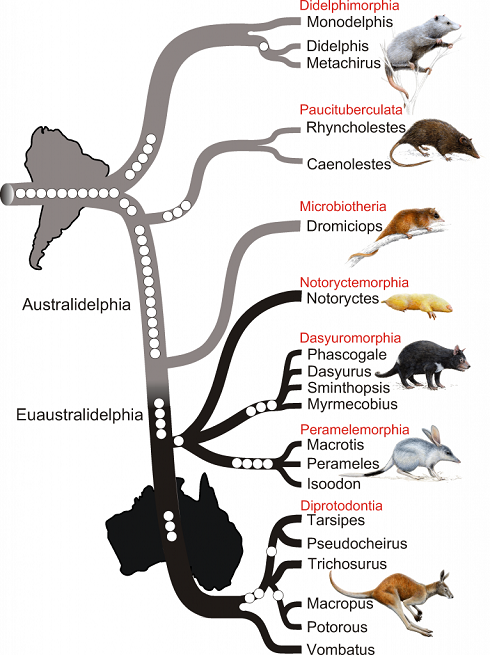
How Have Marsupials Evolved?
The phylogenetic relationships between two orders of marsupials have been intesively debated. Authors benefited from recent sequencing projects which provided two marsupial genomes: this of the South American opossum (Monodelphis domestica) and the one of a kangaroo, the Australian tammar wallaby (Macropus eugenii). Retroposons are suitable and homoplasy-free markers: their insertion sites are random; parallel…
-
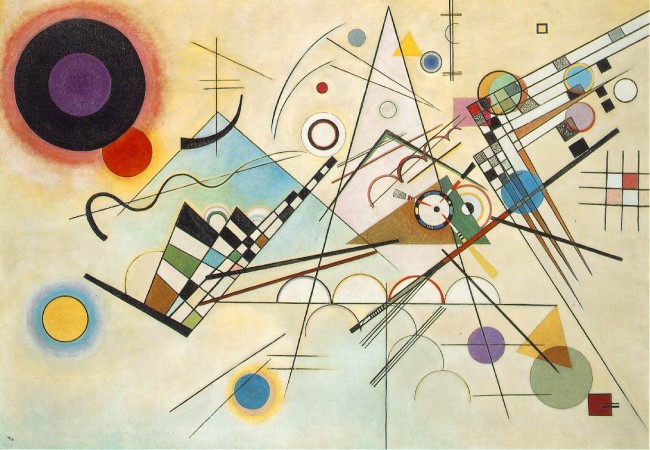
Tasting colours and seeing sound: Synaesthesia
“One hears a sound but recollects a hue, invisible the hands that touch your heartstrings,” wrote Vladimir Nabokov, 20th century novelist. He experienced a curious condition called synaesthesia, which comes from the Greek words syn (together) and aisthesis (perception) and literally means ‘joined perception’. The condition basically causes a fusion of sensory perceptions in which…
-

The Continuing Saga of the Genetically Modified Plant
GM (Genetically Modified) Foods “Jack! Did you see that potato move?! He’s a GM, that one, he’s sprouted eyes and I bet he’ll grow legs next! He’s gonna round up his buddies and take over the farm!” That opening is ridiculous because farmers are a wise group of people and genetic modification of crops will…
-
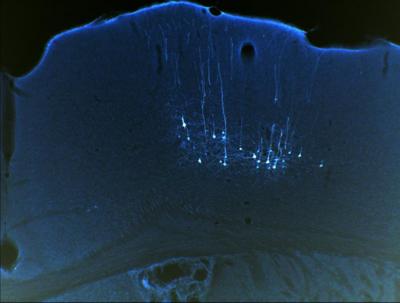
Singing Mice Show Signs of Learning
Like songbirds and humans, male mice have brain circuits and behaviors they may use to learn some of their sounds. Guys who imitate Luciano Pavarotti or Justin Bieber to get the girls aren’t alone. Male mice may do a similar trick, matching the pitch of other males’ ultrasonic serenades. The mice also have certain brain…
-
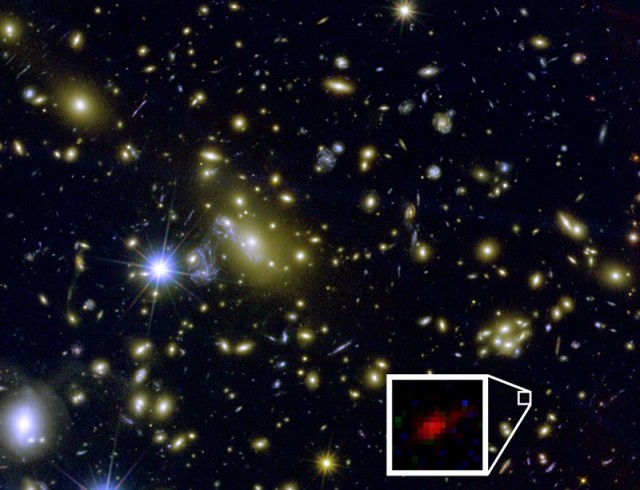
A long time ago in a galaxy far, far away
Feast your eyes on this image… The tiny object in that inset may not look like much. A blurry smudge of red pixels. Not nearly as dramatic as the stunning bouquet of galaxies all around it. But in astronomy, not everything is quite so straightforward. That small red smudge is probably the most exciting thing…
-

Weekly Science Picks
It’s been an interesting week for science news, and I’ve been lucky enough to be asked to give this week’s science picks! This made me spend a little while sipping contemplatively on a cup of vanilla iced coffee and wondering where to even start… The articles I’ve selected are, of course, slanted towards my own…
-
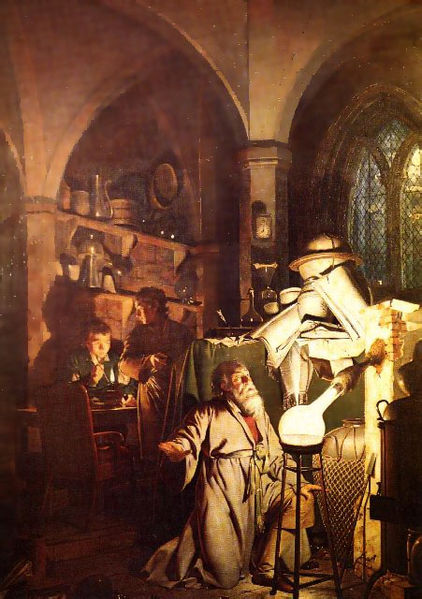
The (nuclear) alchemists of Darmstadt and the doubly magic tin-100 nucleus
An international group of researchers announced in the journal Nature that they had succeeded in creating tin-100. This experiment helps us understand how heavy elements have formed. A few minutes after the Big Bang the universe contained no other elements than the lightest; hydrogen and helium. We, the objects around us, the Earth and the…
-
An outdated appetite control system in a rapidly evolving world?
Imagine yourself for a moment waiting for a meal at your favourite restaurant, local takeaway store or at home counting down the time until the oven buzzer sounds. You know you’re hungry, but we seldom think or care about the complex series of processes that go on inside our bodies that drive that hunger. And…
-

Did life’s building blocks crash land?
In 1969, on September 28, the skies near Murchison, Victoria (not to be confused with Murchison, Western Australia) were illuminated by a dramatic sight. A spectacular fireball blazed its way through Earth’s atmosphere, its outer layers heated to extreme temperatures by its speed. Residents of the town reported seeing the fireball split into three pieces…