Category: Women in Science
-

Four women researchers who were overshadowed in the sciences
As an advocate of women in science, I am illustrating why supporting the presence of women researchers as the voices of science today plays the crucial role, by presenting four stories of women who have changed the world in the male-dominated world of science, and still have been overlooked throughout their careers. Beside well known…
-
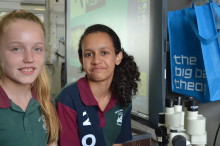
If Ada can, so can we
I have written before about the need to encourage our girls to pursue science in school and beyond. From my experience, girls at school are often reluctant to participate in science at first, until they are shown the possibilities that science offers. Girls need people to aspire to. Girls need to be shown that they…
-

A Tale of Two STEM Women
Ada Lovelace Day is a day for celebrating the achievements of women in STEM (Science, Technology, Engineering and Math) fields. Recently, the New York Times published a fantastic article by Eileen Pollack, “Why Are There Still So Few Women in Science”. Women were leaving the profession not because they weren’t gifted but because of the…
-
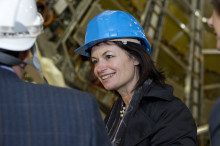
Women take centre stage at ground breaking healthcare conference
Over 50% of the speakers are prominent females in the scientific healthcare field at the ‘World Research and Innovation Congress – Pioneers in Healthcare’ event, Steigenberger Grandhotel, Brussels, 5 and 6 June, 2013 Despite playing a significant role in science and healthcare throughout the ages, women globally are under-represented in this sector. A recent article…
-
Science: It’s a Girl Thing?
The role of gender has arisen in many a conversation in my science social circles as of late. Friend and fellow contributor to Australian Science Danielle Spencer sent the video “Science: It’s a Girl Thing!” a few weeks back. (You can view it below.) I had never seen it, but is has sure stuck with…
-

Sometimes it’s hard to be a woman (in science)
Obtaining a senior academic position for any aspiring young academic is one of those uphill struggles with roads lined with self doubt, setbacks and sacrifice. Some call it the way to tenure-track, in my mind it’s one of those ill-defined paths through a potentially haunted forest inhabited with monsters, gigantic poisonous spiders and creepy people…
-
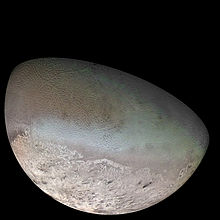
The Case for Neptune
Take a moment to consider Neptune. The eighth planet in our solar system, the planet farthest from the Sun, and the third most massive planet in our solar system. Also one of the least visited, and consequently one of the least understood planets in our solar system. Neptune was discovered in 1846. Forty years later,…
-
Hands on Science in the Early Years
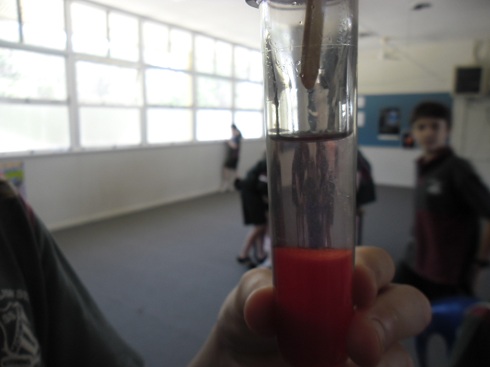
Hands on science activities to engage students in scientific inquiry and investigation are key in the early years to develop skills and knowledge in all areas of science. No one knows this better than Mrs Suzanne Clarke who is the founder of the mini-scammers science club at Mitchelton State School, a feeder club for SC@M…
-

Weekly Science Picks
The midlife crisis is more complicated than first thought. It might be time to stop blaming troubled marriages and feeling obsolete in a sea of younger colleagues. A study published in the Proceedings of the Natural Academy of Sciences has revealed that chimpanzees and orangutans also experience a midlife crisis. Having a midlife crisis may…
-
Setting up a science club in a primary school: Why you should!
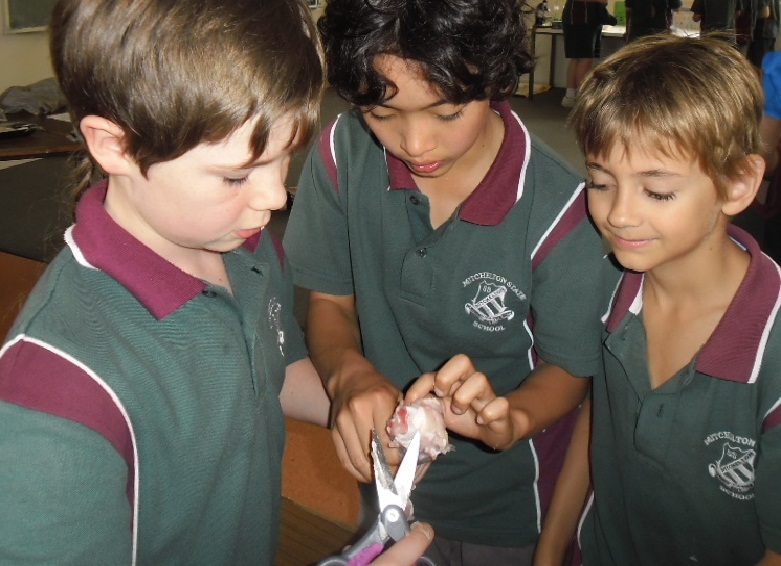
Last week, I dissected a chicken leg and while many may believe such a thing is not extraordinary having done it so many times, the ordinary became the extraordinary when I saw it through the eyes of a child in our recently established science club. The research on extra-curricular clubs is growing and with it…
-
The Gender Myth and Science. Our Response at SC@M
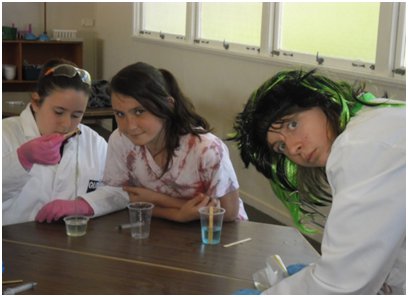
Girls are just not as good at science as boys. Men do hard sciences, women do soft sciences. Gender stereotypes have existed long-term throughout the spectrum of sciences. Most people have witnessed it first-hand. Patients question expert female doctors, yet implicitly trust their male counterparts. Laboratories are full of female scientists with male leads. Why…
-
Interview: Keri Bean—Mars meteorologist, Curiosity Rover team member
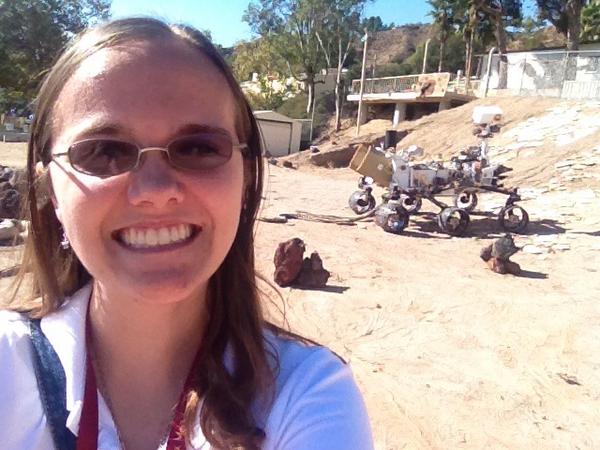
Keri Bean is a meteorologist specialising in the atmospherics of other planets. She is on the team operating the Curiosity Rover for NASA’s Mars Science Laboratory mission. Prior to MSL, Keri has had roles in the missions for other Mars rovers Spirit and Opportunity, a prototype Moon rover, the Phoenix Mars Lander, and the Hubble…
-
How Have Marsupials Evolved?
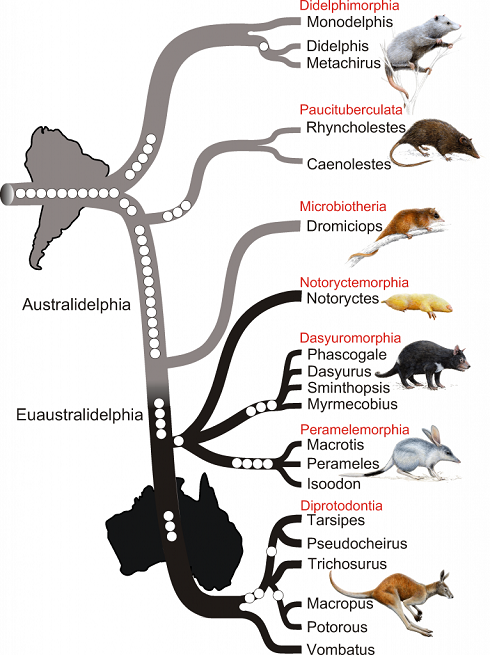
The phylogenetic relationships between two orders of marsupials have been intesively debated. Authors benefited from recent sequencing projects which provided two marsupial genomes: this of the South American opossum (Monodelphis domestica) and the one of a kangaroo, the Australian tammar wallaby (Macropus eugenii). Retroposons are suitable and homoplasy-free markers: their insertion sites are random; parallel…
-
Tasting colours and seeing sound: Synaesthesia
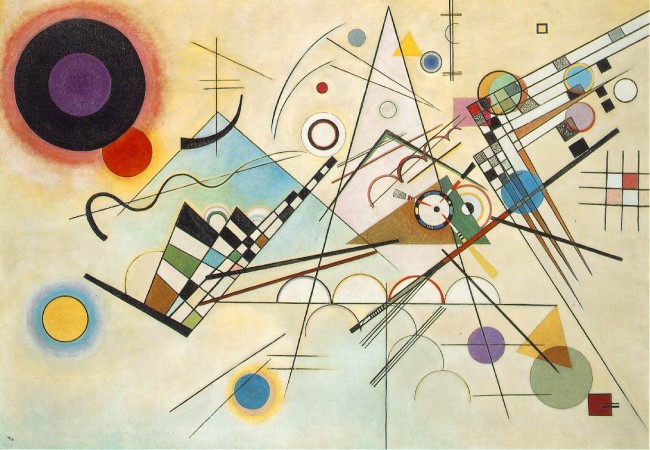
“One hears a sound but recollects a hue, invisible the hands that touch your heartstrings,” wrote Vladimir Nabokov, 20th century novelist. He experienced a curious condition called synaesthesia, which comes from the Greek words syn (together) and aisthesis (perception) and literally means ‘joined perception’. The condition basically causes a fusion of sensory perceptions in which…