Category: Space
-
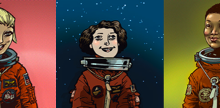
Women in Space – Valentina Tereshkova
This article is the first in a series of articles in which I will profile every woman astronaut, cosmonaut and taikonaut who has been into space. The last time I checked 58 women have travelled into space, by the end of this year there may be a few more! We’re going to start this series…
-
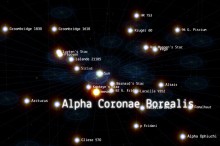
Fascinating short film about NASA’s Dawn: the very beginning of us
This fascinating video, narrated by Leonard Nemoy, gives you a glimpse into the origins of our solar system and NASA Dawn mission’s journey to Vesta & Ceres and its hope to unveil clues as to what was going on at the very beginning of our solar system’s formation! NASA’s Dawn mission is a spacecraft designed to collect data…
-
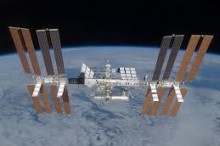
The Risk of Human Space Flight to Mars
This past week NASA announced that in 2015 they would be sending two astronauts to the International Space Station (ISS) for a year-long mission. This is an expected, and necessary step in the preparation for human spaceflight to Mars. If we are to have human explorers on the surface of Mars, we need to understand…
-
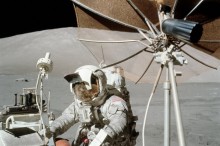
Apollo 17: last men on the moon
After kangaroo hopping back to the lunar rover, Eugene and Jack drove back to the lunar module, Challenger. There they dusted each other off and loaded the last of their 100kg of lunar rock samples. Jack cleaned up inside While Eugene parked the rover a kilometre and a half away so the takeoff could be…
-
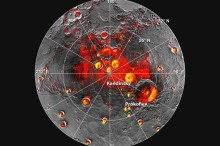
Come on in, the Water is…Frozen
Water – the source of all life. It’s been found on what we have believed for many moons to be that little hot-tempered planet named Mercury. It seems the celestial body has a shady side, a split personality perhaps; one side ferociously hot, while its polar opposite features some craters of ice. NASA scientists have…
-
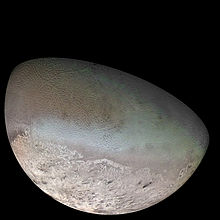
The Case for Neptune
Take a moment to consider Neptune. The eighth planet in our solar system, the planet farthest from the Sun, and the third most massive planet in our solar system. Also one of the least visited, and consequently one of the least understood planets in our solar system. Neptune was discovered in 1846. Forty years later,…
-

Weekly Science Picks
The midlife crisis is more complicated than first thought. It might be time to stop blaming troubled marriages and feeling obsolete in a sea of younger colleagues. A study published in the Proceedings of the Natural Academy of Sciences has revealed that chimpanzees and orangutans also experience a midlife crisis. Having a midlife crisis may…
-
Weekly Science Picks
Ah, the weekend! Time to kick back, relax, and look back over everything that’s happened over the past few days. And I’m rather happy to say that some quite interesting things have happened, including the Leonid meteor shower which peaked on Friday night (though if you step outside after dark and watch the sky, you…
-
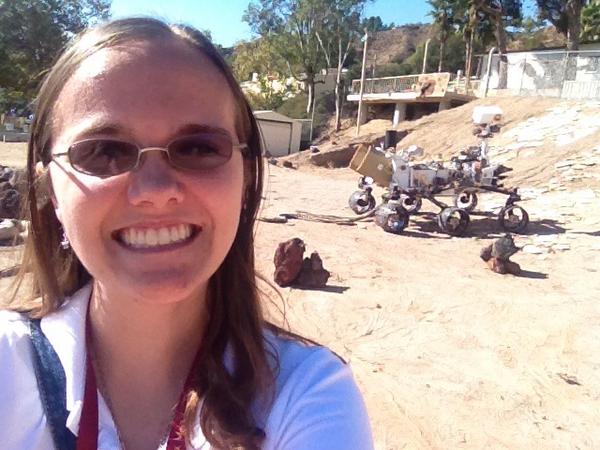
Interview: Keri Bean—Mars meteorologist, Curiosity Rover team member
Keri Bean is a meteorologist specialising in the atmospherics of other planets. She is on the team operating the Curiosity Rover for NASA’s Mars Science Laboratory mission. Prior to MSL, Keri has had roles in the missions for other Mars rovers Spirit and Opportunity, a prototype Moon rover, the Phoenix Mars Lander, and the Hubble…
-

Weekly Science Picks
It seems the rate of everything has increased exponentially. A very bold, vague, yet intriguing statement, you might say. During the course of the past 2 weeks, Hurricane Sandy devastated the East Coast of America, followed closely by a nor’easter. So my science picks for this week center on the themes of natural disasters, planning,…
-
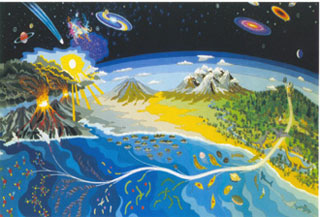
Does my science look big in this? The astrobiology edition
During the 20th century a powerful new idea gradually entered our consciousness and culture: cosmic evolution. We are all par of a huge narrative: a cosmos billions of years old and billions of light years in extent. It is this idea that caught my attention this month via the proceedings of the Sao Paulo Advanced…
-
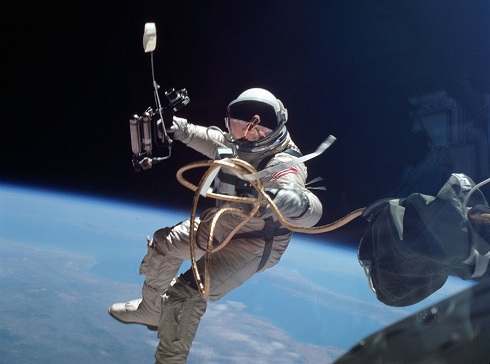
The astronauts who put the USA on the moon
The Soviet Union launched Sputnik 1 into an elliptical low Earth orbit on October 4, 1957. This surprise precipitated the space age and triggered the space race. The success ushered in new technological, political, military, and scientific developments. On April 12, 1961, Yuri Gagarin became the first person in history to leave the Earth’s atmosphere…
-
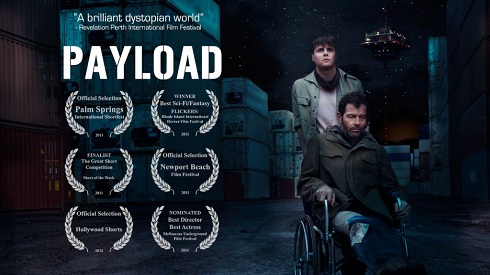
Payload
Science Fiction This may not be the usual topic for a blog post normally displayed on Australian Science, but when our editor Danica mentioned she saw this great Aussie short and asked if one of us writers wanted to do a narrative, I jumped at it. The next 17:55 of my lunch break left me…
-
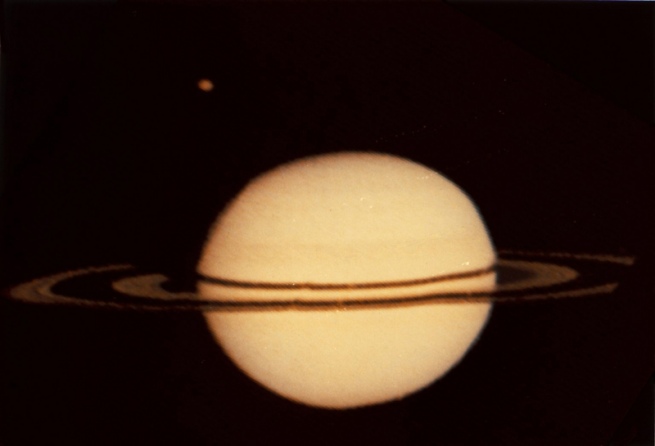
Pioneer anomaly explained?
Pioneer 10 and 11 unveiled the solar system during the golden-age of robotic exploration. Their missions were a success; Pioneer 10 threading the asteroid belt to provide our first close view of Jupiter and its moons, Pioneer 11 catapulting past Jupiter and foraying through the plane of Saturn’s rings. The Pioneers, true to their name,…