Category: Education
-
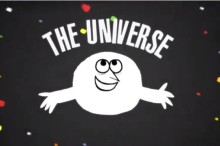
CERN Physicist Explains the Origins of the Universe, for Beginners
How did the universe begin — and how is it expanding? CERN physicist Tom Whyntie has created a new TED-ED three animated video that explains how the universe began, why it’s expanding, and other basic phenomena that concern cosmologists and particle physicists. He shows how cosmologists and particle physicists explore these questions by replicating the heat, energy,…
-
Toolkit – Digital & Media Literacy Education
In industrialised countries, the Internet has increasingly become embedded in everyday life: from the purchase of a train ticket to the consultation of a bibliographical catalogue, the Net can be seen today as an “invisible technology”. In addition, the growth of the Internet at home and school has generated a particular group of users, i.e.…
-
Seriously, NAPLAN to include Science?
In the last few weeks in Australian politics there have been critical discussions regarding the inclusion of science in NAPLAN (the National Assessment Program in Literacy and Numeracy). Without entering too much into the debate regarding the reported advantages or disadvantages of NAPLAN, it is heartening to hear that science is at the forefront of political…
-

Creative Commons Announces “School of Open” project
Just in time to celebrate Open Education Week, here comes a new initiative, the School of Open, a learning environment focused on increasing our understanding of “openness” and the benefits it brings to creativity and education in the digital age. School of Open Project Showcase from Creative Commons on Vimeo. Developed by the collaborative education platform Peer to Peer…
-
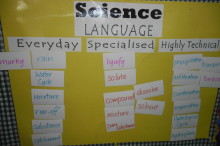
Talking the Language of Science
I have mentioned before that part of the reason why I like science so much is that you get to play with stuff. It might come as no surprise then that I begin each year with a game called “Mrs Spencer Says”. It’s much like Simon Says, but instead of using everyday terms for body…
-

SignMedia: online learning tool for deaf media professionals
SignMedia is an online learning resource that uses sign language to teach vocational written English to deaf media professionals. The project was proud to be a finalist in the recent MEDEA Awards 2012. The world of broadcast media offers an increasingly rich source of employment for deaf graduates and professionals across Europe, but the focus on communication through written English still proves to…
-
We’re Just Playing. Science by Stealth
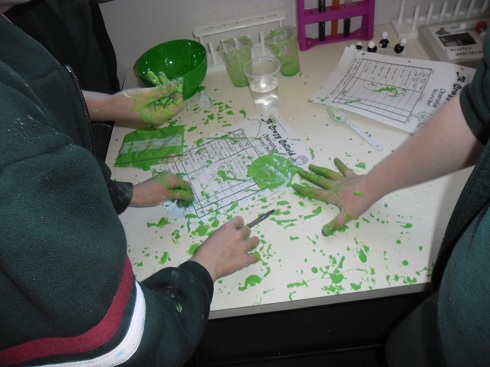
One of my students asked me the other day why I like science so much. “Easy”, I replied. “You get to play with stuff’. Who can argue with Einstein and his claim that, “Play is the highest form of research”? After all, science is about conducting research to make meaning of the world and the…
-
Hands on Science in the Early Years
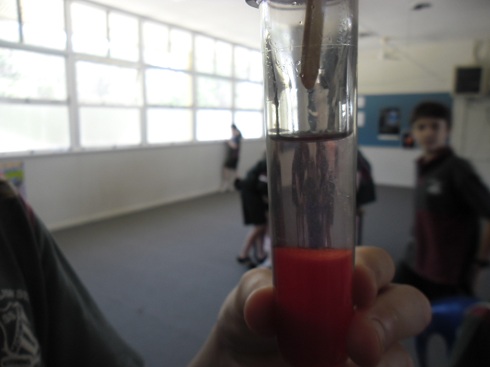
Hands on science activities to engage students in scientific inquiry and investigation are key in the early years to develop skills and knowledge in all areas of science. No one knows this better than Mrs Suzanne Clarke who is the founder of the mini-scammers science club at Mitchelton State School, a feeder club for SC@M…
-

Citizen Science
Citizen Scientists An interesting report released last week from the UK Environmental Observation Framework reveals the benefit of citizen scientists to governmental environmental organisations. The Nerc Centre for Ecology and Hydrology and the Natural History Museum in London, reviewed 234 projects – ranging from small surveys to large-scale programmes. The results found the involvement of volunteers offers “high…
-

Weekly Science Picks
The midlife crisis is more complicated than first thought. It might be time to stop blaming troubled marriages and feeling obsolete in a sea of younger colleagues. A study published in the Proceedings of the Natural Academy of Sciences has revealed that chimpanzees and orangutans also experience a midlife crisis. Having a midlife crisis may…
-
Setting up a science club in a primary school: Why you should!
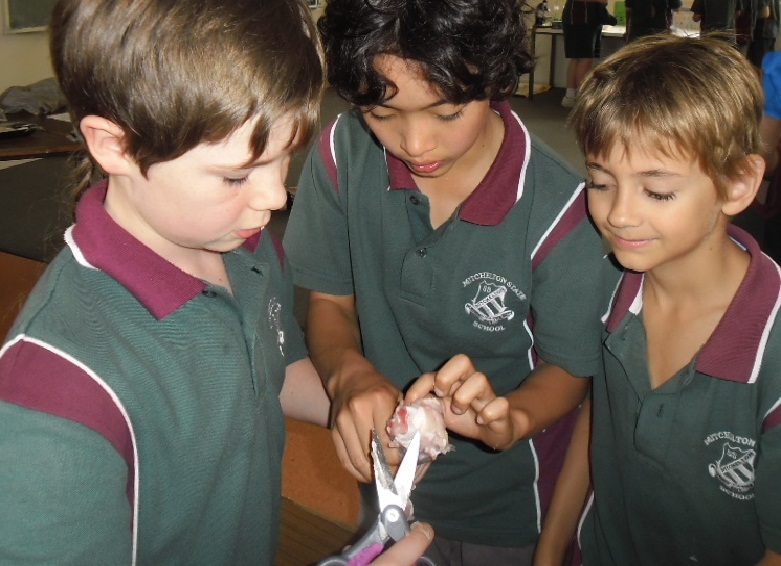
Last week, I dissected a chicken leg and while many may believe such a thing is not extraordinary having done it so many times, the ordinary became the extraordinary when I saw it through the eyes of a child in our recently established science club. The research on extra-curricular clubs is growing and with it…
-
The Gender Myth and Science. Our Response at SC@M
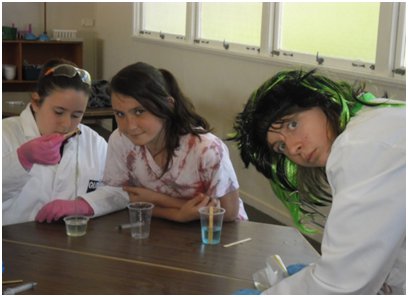
Girls are just not as good at science as boys. Men do hard sciences, women do soft sciences. Gender stereotypes have existed long-term throughout the spectrum of sciences. Most people have witnessed it first-hand. Patients question expert female doctors, yet implicitly trust their male counterparts. Laboratories are full of female scientists with male leads. Why…
-
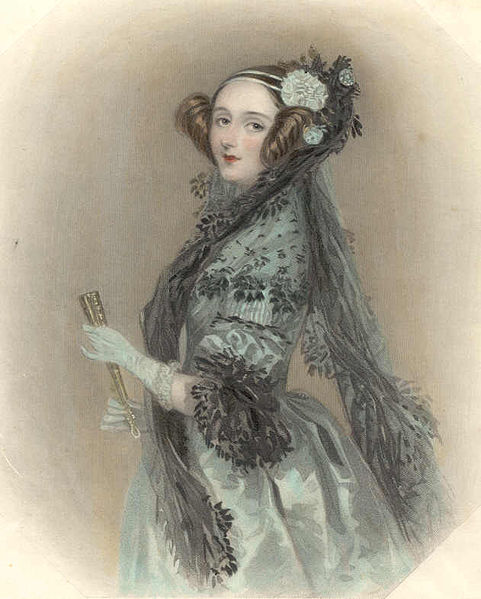
Ada Lovelace Day: celebrating women in science, technology, engineering and maths
In the 1800s, Ada Lovelace, an English mathematician, worked with inventor Charles Babbage on a plan for an “analytical engine.” Though the device was never actually made, it is considered the first computer model, and Ada Lovelace, the first computer programmer. Today, October 16, is Ada Lovelace Day, a celebration of women in science, technology,…
-
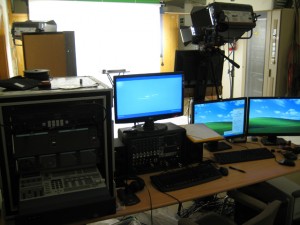
The “POLI” mark: New technologies for university teaching
This article is part of Media and Learning month’s newsletter, dedicated series on lecture capture. It is provided by the Lifelong Learning project REC:all, which aims to explore new ways in which lecture capture can become more pedagogically valuable and engaging, and which is investigating a variety of learning design, technical and legal issues related to lecture capture. Marta Cabedo Fabrés from…